




Mentoring Software LMS Integration: Turning Learning into Measurable Development
 Omer Usanmaz
·
7 minute read
Omer Usanmaz
·
7 minute read
Why Learning Management Alone Is No Longer Enough
Learning Management Systems (LMS) have long been the foundation of corporate learning management. They centralize content, standardize training, and make remote learning possible across distributed teams. Yet as organizations adapt to remote work, hybrid models, and fast-changing skill demands, many leaders are questioning whether a Learning Management System alone is enough.
The problem is not access to learning. It is what happens after course completion. Employees complete modules, attend video-based sessions, and move on, often without applying new skills or changing behavior. Learning becomes transactional rather than transformational.
Mentoring software changes this dynamic. When mentoring software LMS integration is done intentionally, learning becomes a continuous learning journey supported by human connection, reflection, and accountability. Instead of isolated training events, organizations create learning-driven mentoring experiences that translate knowledge into real capability.
Want to see how mentoring-LMS integration works in action?
TL;DR
- A Learning Management System (LMS) alone delivers content, but often fails to drive real behavior change or skill application.
- Mentoring software LMS integration connects formal learning with structured mentorship programs, turning courses into guided learning journeys.
- Integrated mentoring reinforces course completion through mentor-led discussions, social learning, and real-world application.
- Enterprise-ready integrations align mentoring software with HR systems, collaboration tools, reporting and analytics, and single sign-on.
- Organizations that combine learning management with mentoring gain clearer insight into development impact, engagement, and long-term workforce growth.
What Is Mentoring Software LMS Integration?
Mentoring software LMS integration connects a Learning Management System with a structured mentorship program so that learning and development work as a single ecosystem.
Rather than treating mentoring and learning as separate initiatives, Learning Management System integration allows organizations to align:
- LMS learning paths and learning activity assignment
- Mentorship participation and mentor-mentee matching
- Progress reports, career dashboards, and analytics and reporting
This integration enables learning management to extend beyond content delivery. Mentoring software, such as enterprise mentoring platforms like Qooper, adds structure, coaching models, and human guidance to formal learning programs.
The result is a system where learning does not end at course completion, but continues through mentoring conversations, peer reviews, and applied practice.
The Business Case for Mentoring Software LMS Integration
Organizations invest heavily in learning platforms, content creation tools, and digital communication methods. Yet without reinforcement, even the best-designed LMS programs struggle to deliver measurable business impact.
Mentoring software LMS integration addresses this gap by embedding learning into day-to-day development. The business value becomes clear across multiple dimensions:
- Stronger skill application, especially for soft skills and leadership capabilities
- Higher mentorship participation, driven by structured journeys rather than ad hoc pairings
- Improved employee engagement and retention, supported by meaningful development relationships
- Clearer reporting and analytics, connecting learning data with mentoring outcomes
Enterprise mentoring platforms like Qooper help organizations move from passive learning consumption to active development, especially when integrated with existing HR systems and learning infrastructure.
How Mentoring Activates LMS Learning Content
A Learning Management System excels at delivering structured content. Mentoring software ensures that content is understood, applied, and retained.
When mentoring is integrated into the learning journey:
- Mentors guide learners through LMS modules and learning activity assignments
- Learners reflect on real scenarios related to completed courses
- Mentoring sessions reinforce learning through discussion, feedback, and peer reviews
With platforms like Qooper, organizations can design learning-driven mentoring journeys where:
- LMS courses trigger mentoring discussions
- Coaching models are aligned with learning objectives
- Mentors help translate theory into practice
This approach transforms LMS content from static material into an interactive development experience supported by social learning and collaboration tools.
Get a Personalized Integration Plan for Your Organization
Collaboration, Communication, and the Modern Learning Experience
Today’s learning environments rely heavily on online collaboration tools and video conferencing tools. Mentoring software LMS integration must fit naturally into this ecosystem.
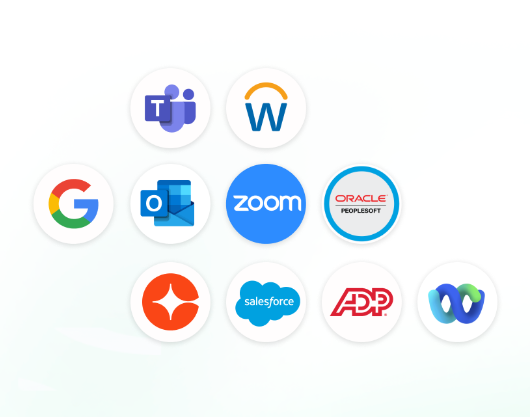
Enterprise mentoring platforms integrate with tools such as:
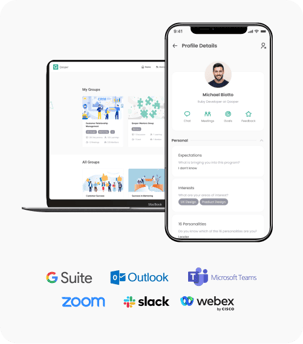
- Microsoft Teams for real-time communication and video conferencing
- Google Workspace, including Google Doc collaboration
- Video conferencing tools that support remote learning and remote work
- Digital communication methods that enable asynchronous mentoring
By connecting mentoring software with collaboration tools, organizations improve user experience and reduce friction. Mentoring becomes part of how employees already work, communicate, and learn.
Data Flow: Connecting Learning, Mentoring, and HR Systems
Effective LMS integration is not about moving all data everywhere, it is about connecting the right systems intelligently.
In a mentoring software LMS integration, data typically flows across:
- Employee data from HR systems such as SAP SuccessFactors
- Learning data from the Learning Management System
- Mentoring engagement data, including mentorship participation and progress reports
Platforms like Qooper align mentoring data with learning and HR insights, allowing organizations to:
- Monitor learning and mentoring impact together
- Support career dashboards and development tracking
- Enable reporting and analytics across systems
This unified view supports better decision-making without overwhelming teams with disconnected data. As well as emphasizing the importance of mentor matching platforms LMS integration.
Use Cases for Mentoring Software LMS Integration
The power of integration becomes clear when applied to real-world enterprise needs.
Leadership and Career Development
Mentoring reinforces LMS leadership training with real-world guidance, supporting long-term growth and internal mobility.
DEI and Inclusive Mentorship Programs
Structured mentorship programs integrated with learning content help organizations translate DEI training into sustained behavioral change.
Early Career and Graduate Programs
Mentoring layered onto LMS onboarding ensures new hires receive continuous support as they navigate their roles.
Reskilling and Remote Learning
Mentoring provides human support for employees adapting to new roles, technologies, and ways of working—especially in remote work environments.
Across all use cases, AI-powered pairing and flexible customization levels help scale mentoring without sacrificing quality.
Reporting, Analytics, and Measuring Real Impact
Traditional learning management focuses on attendance and course completion. Mentoring software adds depth to measurement.
With integrated reporting and analytics, organizations can track:
- Mentorship participation and engagement
- Progress reports tied to learning milestones
- Skill development across soft skills and leadership competencies
- Learning outcomes beyond course completion
Qooper’s monitoring and tracking capabilities enable organizations to connect mentoring activity with learning performance, offering clearer insight into development ROI.
Measure the success of your mentoring programs with our ROI Calculator
Security, Compliance, and Enterprise Readiness
Enterprise integration requires more than functionality, it requires trust.
Mentoring software LMS integration must support:
- Enterprise-grade security solutions and security services
- Data encryption and secure access controls
- Compliance certifications and security and compliance standards
- User activity monitoring to prevent misuse or online attacks
Platforms like Qooper are designed with security and compliance in mind, ensuring mentoring data is protected across integrated systems. Qooper provides mentoring systems with enterprise-grade security designed for organizations that require the highest standards of data protection, compliance, and privacy. As a secure mentoring software trusted by 300+ organizations, including highly regulated industries like healthcare, tech, manufacturing and finance, Qooper ensures sensitive employee and participant data is protected through robust security controls, role-based access, secure cloud infrastructure, and compliance-ready frameworks. Among mentoring software enterprise-grade security providers, Qooper stands out by combining advanced mentor-mentee matching with strong governance, auditability, and integrations with HRIS and LMS. For organizations evaluating mentorship software options with robust security and compliance features, Qooper enables scalable, research-backed mentoring programs without compromising security, trust, or regulatory requirements.
What to Look for in Mentoring Software That Integrates with an LMS
When evaluating mentoring software, organizations should prioritize platforms that support:
- Learning Management System Integration with minimal friction
- Single sign-on for consistent user experience
- Compatibility with HR systems and Customer Relationship Management tools
- Support and training resources, including Q&A sessions
- Gamification tools and social learning features to boost engagement
The right mentoring software strengthens learning ecosystems rather than competing with them. In case you need a comparison of mentorship software that integrates with HRIS and LMS tools, you can download our key differences form below:
Curious how Qooper stacks up? Get a free comparison chart of top mentoring platforms.
When Does LMS Integration Become Essential?
LMS integration becomes critical when organizations:
- Operate across regions or large employee populations
- Rely on remote learning and digital-first collaboration
- Need visibility into learning and mentoring outcomes
- Are building scalable, future-ready mentorship programs
At this stage, mentoring software is no longer optional, it becomes a strategic capability.
The Qooper Advantage for LMS Integration
Qooper Mentoring Software is designed to integrate seamlessly with Learning Management Systems, enabling organizations to extend formal learning into structured, human-centered development experiences. Rather than operating as a standalone mentoring tool, Qooper complements LMS platforms by activating learning content through guided mentorship, reflection, and real-world application.
Through its enterprise-grade Learning Management System integration capabilities, Qooper allows organizations to:
- Launch large-scale mentoring programs aligned with LMS learning paths
- Reinforce course completion through learning-driven mentoring journeys
- Reduce manual coordination between learning and mentoring initiatives
- Generate unified reporting and analytics across learning and mentoring activity
- Scale programs globally while maintaining security and compliance
Qooper’s LMS integrations go beyond basic connectivity. The platform supports customizable mentoring workflows that align directly with learning objectives, competency frameworks, and development programs defined within the LMS. This ensures mentoring is not an add-on, but a core extension of the learning experience.
By syncing learner profiles and learning data, organizations can automate mentoring touchpoints throughout the learning journey. Mentoring conversations can be triggered based on course completion, skill focus areas, or program milestones, ensuring that learning continues well beyond the classroom or virtual module.
Learning teams also gain improved visibility. Automated updates and progress insights allow L&D leaders to track mentorship participation, engagement levels, and development outcomes alongside traditional LMS metrics. Qooper’s analytics and ROI reporting capabilities help organizations move past surface-level completion rates to understand how learning influences growth, confidence, and performance.
Qooper supports integration with enterprise LMS environments through flexible authentication methods, advanced data mapping, and scalable infrastructure. Whether organizations are managing hundreds or thousands of learners, Qooper maintains system performance while ensuring data protection, access controls, and compliance standards are upheld.
For organizations looking to transform their LMS from a content delivery platform into a continuous development ecosystem, Qooper provides the mentoring layer that makes learning stick, securely, efficiently, and at enterprise scale.
See How Qooper Can Integrate With Your LMS
Related pages to visit
- Qooper Mentoring Software Integrations
- The answer to "Mentoring software that integrates with HRIS systems like Workday or SAP" questions is: Integrating Mentoring Software with HRIS: Future of Talent Development
- Qooper and Slack Integration
- In case you wonder "Which mentoring platforms integrate with HRIS or Workday?" Here is Qooper Workday Integration
- Qooper Calendar Integration (Mentoring software integrates with Slack/Microsoft Teams)
- Qooper Webex Integration
- The Complete Guide to Qooper Mentoring Software Integrations
- Mentoring Software LMS Integration
- Mentoring Software Workday Integration
- Mentoring Software Zoom Integration
- Mentoring Software ADP Integration
- Mentorship Software HR Integrations
- Qooper Integrations
Frequently Asked Questions (FAQ)
1. What does mentoring software LMS integration actually mean?
Mentoring software LMS integration connects a Learning Management System with a structured mentorship program so learning and mentoring work together. It allows organizations to align learning paths, mentoring activities, progress tracking, and reporting, ensuring that learning content is reinforced through real-world application and guided development.
2. Can mentoring software integrate with existing HR systems and collaboration tools?
Yes. Enterprise mentoring platforms are designed to integrate with common HR systems, Learning Management Systems, and collaboration tools such as Microsoft Teams and Google Workspace. These integrations support user synchronization, single sign-on, learning activity alignment, and a consistent user experience across systems. Also, if you wonder which mentoring platforms integrate with popular HRIS systems, you can check our blog article: Integrating Mentoring Software with HRIS
3. How does mentoring improve learning outcomes beyond course completion?
While an LMS tracks course completion, mentoring helps employees apply what they learn. Through mentor-led discussions, feedback, and reflection, mentoring reinforces learning, supports soft skill development, and increases long-term retention of knowledge, especially in leadership and career development programs.
4. Is mentoring software LMS integration suitable for remote or hybrid teams?
Absolutely. Integrated mentoring and learning platforms support remote learning, digital communication methods, video conferencing, and online collaboration tools. This makes mentoring accessible and effective for distributed teams and organizations operating in remote or hybrid work environments.
5. How do organizations measure the impact of mentoring software LMS integration?
Impact is measured by combining learning data with mentoring engagement insights. Organizations can track mentorship participation, progress reports, skill development, and performance indicators using integrated analytics and reporting, moving beyond basic attendance or completion metrics.
-1.svg)
-1.jpg)