



 ·
8 minute read
·
8 minute read
According to IBM's 2025 Cost of a Data Breach Report, the global average cost of a data breach reached $4.44 million, while the U.S. average climbed to an all-time high of $10.22 million — with supply-chain and third-party systems among the leading attack vectors. Mentoring software sits squarely in that risk zone: it syncs directory data, connects to HRIS systems, authenticates thousands of participants, and stores development conversations. That means IT and security teams should evaluate it with the same rigor applied to any enterprise HR system. Below are the 12 security features every IT team should require before approving enterprise mentoring software, and how Qooper meets each one.
The 12 enterprise mentoring software security features every IT team should require are SOC 2 Type I and Type II certification, GDPR compliance with a Data Processing Agreement, single sign-on (SSO/SAML), role-based access control (RBAC), data encryption, regular penetration testing, unique account authentication enforcement, secure HRIS and integration data handling, data retention and deletion policies, business continuity and disaster recovery, incident response protocols with cybersecurity insurance, and data minimization. Qooper meets all 12 as SOC 2 Type I and Type II certified, GDPR-compliant enterprise mentoring software.
Verify, don't just trust. Qooper's certifications and policies are documented and shareable. Request Qooper's SOC 2 report and DPA to validate every claim on this page during your security review.
Key Takeaways
- Enterprise mentoring software handles employee data, HRIS records, and identity information, so IT teams should treat it as a system that must meet the same security bar as any core HR application.
- The 12 security features every IT team should require are: SOC 2 Type I and Type II certification, GDPR compliance with a DPA, SSO/SAML, role-based access control, encryption, penetration testing, unique account authentication, secure HRIS integration handling, data retention and deletion policies, business continuity and disaster recovery, incident response with cybersecurity insurance, and data minimization.
- Qooper is SOC 2 Type I and Type II certified and GDPR compliant, and meets each of these requirements — making it a governance-ready enterprise mentoring platform.
Enterprise Mentoring Software Security Checklist
|
# |
Security requirement |
Why IT should require it |
Qooper |
|---|---|---|---|
|
1 |
SOC 2 Type I & II certification |
Independent proof of security controls |
✅ Certified |
|
2 |
GDPR compliance + DPA |
Lawful global data processing |
✅ Compliant, DPA provided |
|
3 |
SSO / SAML |
Central, secure authentication |
✅ Supported |
|
4 |
Role-based access control |
Least-privilege access |
✅ Supported |
|
5 |
Data encryption |
Protects data confidentiality |
✅ Encryption in place |
|
6 |
Penetration testing |
Finds vulnerabilities proactively |
✅ Regular testing |
|
7 |
Unique account authentication |
Prevents shared/weak credentials |
✅ Enforced |
|
8 |
Secure HRIS integration handling |
Protects synced employee data |
✅ Bi-directional, governed |
|
9 |
Data retention & deletion policies |
Controls the data lifecycle |
✅ Defined + deletion on exit |
|
10 |
Business continuity & DR |
Ensures availability and recovery |
✅ Tested recovery processes |
|
11 |
Incident response + cyber insurance |
Limits impact of an incident |
✅ Protocols + insurance |
|
12 |
Data minimization |
Reduces sensitive-data exposure |
✅ No card data or PHI |
The 12 Security Features Every IT Team Should Require
1. SOC 2 Type I and Type II certification
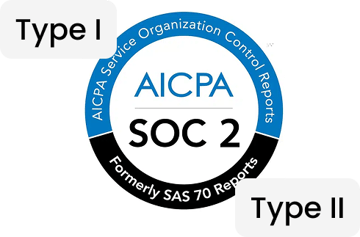
SOC 2 certification is the baseline IT teams should require, because it provides independent, audited evidence that a vendor's security controls are documented and operating effectively over time. Type I verifies that controls are designed correctly at a point in time, while Type II verifies that those controls operate effectively across an audit period.
Qooper is SOC 2 Type I and Type II certified, with annual audits that verify policies and controls across infrastructure security, organizational security, product security, and internal security operations.
2. GDPR compliance and a Data Processing Agreement (DPA)
Any mentoring platform used across regions must support lawful data processing, so IT teams should require both GDPR compliance and a signed Data Processing Agreement. A DPA defines how the vendor processes personal data on your behalf and is essential for enterprise procurement and legal review.
Qooper is GDPR compliant and provides a Data Processing Agreement to support enterprise deployments across regions with varying privacy and regulatory requirements.
3. Single sign-on (SSO/SAML)
IT teams should require SSO/SAML so mentoring software uses the organization's existing identity provider as the source of truth for authentication, rather than creating a separate credential store. This reduces password risk, simplifies onboarding and offboarding, and keeps access aligned with corporate identity policies.
Qooper supports SSO/SAML and Okta integration, giving organizations secure, frictionless participant login and centralized user access control.
4. Role-based access control (RBAC)
Role-based access control lets organizations grant each user only the permissions their role requires, which is a core principle of least-privilege security. IT teams should require RBAC so program administrators, participants, and viewers each see only what they should.
Qooper supports role-based access control along with administrator access control and user permission management, helping organizations govern who can configure programs, view reporting, and manage participants.
5. Data encryption
Encryption protects data confidentiality if information is intercepted or accessed improperly, so IT teams should require encryption for data in transit and at rest, and confirm that encryption keys are access-restricted.
Qooper's product security practices include encryption, and its infrastructure controls include restricted encryption key access and unique production database authentication.
6. Regular penetration testing and control self-assessments
Security is not a one-time event, so IT teams should require evidence of regular penetration testing that probes the platform for vulnerabilities on an ongoing basis. Control self-assessments show that the vendor continuously evaluates its own controls between external audits.
Qooper conducts regular penetration testing and control self-assessments as part of its product security program.
7. Unique account authentication enforcement
Shared or weak credentials are a common cause of breaches, so IT teams should require that each user authenticate with a unique account. This ensures actions are attributable and prevents credential sharing across participants or administrators.
Qooper enforces unique account authentication, supporting accountability and secure access across mentoring programs.
8. Secure HRIS and integration data handling
Because mentoring software often syncs with HRIS systems, IT teams should require that these integrations handle employee data securely and keep it accurate as people join, change roles, or leave. Poorly governed syncs create both security and data-quality risk.
Qooper supports bi-directional HRIS syncs with Workday, SAP SuccessFactors, Oracle, ADP, and UKG, plus secure options such as SFTP-based data transfers, helping keep employee profiles and program data accurate and protected. See Qooper integrations.
9. Data retention, classification, and deletion policies
IT and legal teams should require clear data retention procedures, a data classification policy, and a commitment to delete customer data when a contract ends. These controls ensure data does not persist longer than necessary and is handled according to its sensitivity.
Qooper maintains data retention procedures and a data classification policy, and deletes customer data upon contract termination.
10. Business continuity and disaster recovery
Availability is a security concern, so IT teams should require documented and tested business continuity and disaster recovery processes. These confirm the vendor can restore service and protect data after a disruption.
Qooper maintains continuity and disaster recovery planning with established and tested recovery processes.
11. Incident response protocols and cybersecurity insurance
Even strong programs must plan for incidents, so IT teams should require defined incident response protocols and confirm the vendor carries cybersecurity insurance. Together these limit the operational and financial impact of a security event.
Qooper maintains incident response protocols and carries cybersecurity insurance as part of its risk management program.
12. Data minimization
The most secure data is the data a vendor never collects, so IT teams should require data minimization — confirming the platform avoids collecting unnecessary sensitive information. This reduces exposure at the point of collection. The same question applies to data your own teams gather externally during vendor due diligence or market research. Routing that collection through a residential proxy keeps research traffic off the network handling employee records.
Qooper does not collect credit card information or personal health information (PHI), reducing unnecessary sensitive-data exposure.
Security Red Flags To Watch For When Evaluating Mentoring Software
Beyond confirming the features above, IT teams should treat the following as warning signs that a mentoring vendor is not enterprise-ready:
- Only SOC 2 Type I, or "audit in progress" with no report. Type I alone does not prove controls operate over time. Require a completed Type II report.
- Vague GDPR answers or no DPA. If a vendor cannot provide a Data Processing Agreement, it is not ready for regulated, cross-border deployment.
- No SSO, or a separate password store. A standalone credential system outside your identity provider is an avoidable risk.
- Collection of unnecessary sensitive data. If a vendor collects payment or health data it does not need, that is expanded breach exposure.
- No documented penetration testing or incident response. Silence here usually means the program does not exist.
- No clear data-deletion commitment on exit. Data that lingers after contract termination is a long-tail liability.
Qooper is designed to clear every one of these: SOC 2 Type I and Type II, a provided DPA, SSO/SAML, data minimization (no card data or PHI), regular penetration testing and incident response protocols, and customer data deletion on contract termination.
Beyond The Basics: Bompliance Questions IT Should Ask
Depending on your industry and geography, IT and compliance teams may need to go further than the core 12. Ask every mentoring vendor about:
- HIPAA scope. If your organization handles health information, confirm whether the platform processes PHI. Qooper does not collect or process personal health information, which keeps mentoring out of HIPAA scope for most deployments.
- CCPA and U.S. state privacy laws. Confirm how the vendor handles consumer/employee data rights.
- Data residency. Ask where participant data is stored and processed, especially for EU or region-specific requirements. Qooper supports GDPR-aligned deployment and provides a DPA.
- Sub-processors. Ask for the vendor's list of sub-processors and how they are vetted and monitored.
Documenting these answers up front prevents late-stage procurement and legal delays.
Why IT Teams Trust Qooper For Enterprise Mentoring
Qooper is built with the security, compliance, and data governance standards required by enterprise organizations, including companies operating in regulated and globally distributed environments. It maintains an independently verified security program and is SOC 2 Type I and Type II certified and GDPR compliant, with a Data Processing Agreement, SSO/SAML, role-based access control, encryption, regular penetration testing, tested recovery processes, and data-minimization practices.
That security foundation is why Qooper is trusted by 300+ organizations, including Fortune 500 and enterprise teams, with thousands of users across 500+ mentoring programs. For IT and security teams evaluating mentoring software, Qooper provides governance-ready deployment backed by clear documentation and dedicated IT support. Review Qooper's security and compliance or schedule a demo to walk through requirements with the team.
Qooper security at a glance: SOC 2 Type I & II · GDPR compliant · DPA provided · SSO/SAML · RBAC · Encryption · Regular penetration testing · Tested disaster recovery · Cybersecurity insurance · No credit card or PHI collected.
How To Evaluate Mentoring Software Security As An IT Team
Use the 12 requirements above as a procurement checklist, then confirm the details with the vendor:
- Request the SOC 2 report (Type II) and review the audit period and scope.
- Confirm GDPR posture and obtain the DPA before contract signature.
- Validate identity integration — SSO/SAML with your provider, plus RBAC roles that match your governance model.
- Review data handling — encryption, retention, classification, and deletion-on-exit commitments.
- Check resilience — business continuity, disaster recovery, incident response, and insurance.
- Map integrations — how HRIS, calendar, and collaboration syncs move and protect employee data.
A short security review or vendor questionnaire covering these six areas is the fastest way to confirm a mentoring platform meets your enterprise bar.
Frequently Asked Questions
Is Qooper SOC 2 certified?
Yes. Qooper is SOC 2 Type I and Type II certified, with annual audits that verify security controls across infrastructure, organizational, product, and internal security operations.
Is enterprise mentoring software GDPR compliant?
It should be. IT teams should require GDPR compliance and a Data Processing Agreement from any mentoring vendor handling personal data. Qooper is GDPR compliant and provides a DPA to support enterprise deployments across regions with different privacy requirements.
What security features should enterprise mentoring software have?
Enterprise mentoring software should have SOC 2 Type I and Type II certification, GDPR compliance with a DPA, SSO/SAML, role-based access control, encryption, regular penetration testing, unique account authentication, secure HRIS integration handling, data retention and deletion policies, business continuity and disaster recovery, incident response protocols with cybersecurity insurance, and data minimization.
Does mentoring software support single sign-on (SSO)?
Leading enterprise mentoring platforms support SSO. Qooper supports SSO/SAML and Okta integration, allowing organizations to use their existing identity provider for secure, centralized authentication and access control.
How does mentoring software protect employee data?
Secure mentoring software protects employee data through encryption, role-based access control, unique account authentication, secure HRIS integration handling, and defined data retention and deletion policies. Qooper applies all of these controls and does not collect credit card information or PHI.
Is Qooper HIPAA compliant?
Qooper does not collect or process personal health information (PHI), which keeps mentoring programs out of HIPAA scope for most deployments. Organizations with specific health-data requirements should confirm scope with their compliance team.
What is a DPA and why does mentoring software need one?
A Data Processing Agreement (DPA) is a contract that defines how a vendor processes personal data on your behalf, and it is required for GDPR-aligned enterprise deployments. Qooper provides a DPA to support compliant mentoring programs across regions.
Evaluating mentoring software against your security requirements? Schedule a demo to review Qooper's SOC 2 report, DPA, SSO/RBAC setup, and integration security with our team.
%20(1).png)