




 ·
10 minute read
·
10 minute read
HR leaders today are expected to build programs that deliver measurable outcomes, not just engagement. Mentoring has emerged as one of the most powerful levers for performance, retention, leadership development, and DEIB, but only when it is implemented with structure and accountability.
This is where a comprehensive mentoring toolkit for HR becomes essential.
At Qooper, we work with organizations across industries that are scaling mentoring programs globally. One pattern is clear: successful programs are never built on ad hoc documents or informal relationships. They are powered by intentional frameworks, data-driven decisions, and repeatable tools.
This article brings together the most critical mentoring resources HR teams need, covering program design, matching, engagement, reporting, and ROI, into a single, practical toolkit.
Why HR Needs a Structured Mentoring Toolkit
Mentoring programs often fail for reasons that have nothing to do with intent. HR teams care deeply about employee growth, but without the right infrastructure, mentoring becomes difficult to sustain and even harder to defend.
A structured mentoring toolkit for HR helps organizations:
- Align mentoring with business, L&D, and talent goals
- Standardize mentor–mentee experiences across teams and regions
- Capture outcomes that matter to leadership
- Scale mentoring without increasing administrative burden
Qooper Mentoring Software is built around this exact philosophy: mentoring should operate as a system, not a side initiative. The resources below reflect the same principle, each one addresses a specific operational challenge HR teams face.
Starting a Mentoring Program: Building the Right Foundation
Every mentoring program begins with design decisions that determine long-term success.
How to Start a Mentoring Program in Your Organization
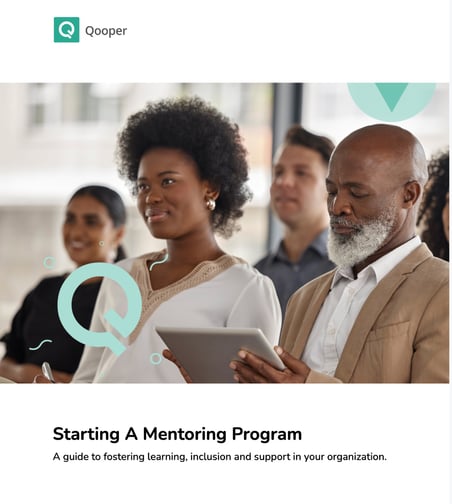
This guide helps HR leaders move from concept to execution by addressing critical early questions: Who is mentoring for? What outcomes matter? How will success be measured?
Rather than treating mentoring as a one-size-fits-all initiative, this resource encourages HR teams to define purpose, scope, and ownership early, an approach that mirrors how mentoring programs are structured within Qooper-powered organizations.
Mentoring as a Driver of Performance and Skill Development
Mentoring is often positioned as a “soft” benefit, but the data tells a different story.
8 Powerful Ways Mentoring Boosts Performance
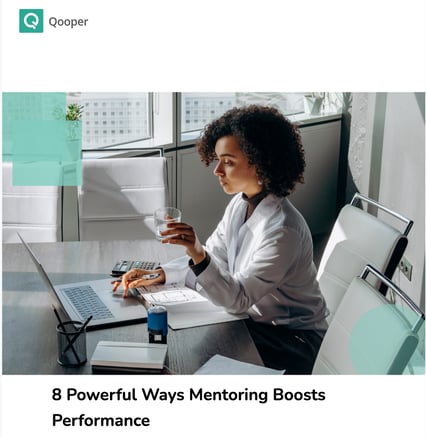
This resource outlines how mentoring improves real business outcomes, including skill acquisition, confidence, productivity, and leadership readiness. For HR teams, it provides language and evidence to reposition mentoring as a performance enabler rather than an engagement perk.
Frontline Skills Development Through Mentoring
For organizations with large frontline or operational workforces, this template helps HR connect mentoring to job-specific skill development. It supports structured progress tracking, an approach commonly used in Qooper programs where mentoring reinforces on-the-job learning.
Integrating Mentorship with Learning and Development Initiatives
One of the biggest mistakes HR teams make is running mentoring separately from L&D.
Integrating Mentorship Programs with Learning and Development Initiatives
This guide shows how mentoring can amplify formal learning by providing contextual application, peer guidance, and accountability. It helps HR teams design mentoring programs that reinforce training investments rather than compete with them.
Qooper customers often integrate mentoring directly into their L&D strategies, creating a continuous learning ecosystem instead of isolated initiatives.
Mentor–Mentee Matching: Where Outcomes Begin or End
No mentoring toolkit for HR is complete without a serious approach to matching.
Mentor-Mentee Matching Template
This template helps HR teams move away from ad-hoc or convenience-based pairings by defining clear, intentional matching criteria tied to program goals, participant experience levels, skills, and development needs. It provides a structured framework for evaluating potential matches consistently, reducing bias and guesswork while increasing transparency in the matching process. By standardizing how matches are assessed, HR teams can scale mentoring programs more confidently and create stronger, more purposeful mentor–mentee relationships from the start.
Mentor Matching Questionnaire
The mentor matching questionnaire captures structured, comparable input directly from participants, including expectations, learning objectives, availability, and mentoring preferences. This data enables HR teams to improve compatibility, set clearer expectations early on, and increase engagement by aligning mentors and mentees around shared goals. The questionnaire reflects the same data-driven logic used in Qooper’s intelligent matching workflows, helping programs shift from subjective matching decisions to repeatable, insight-based practices.
Mentor–Mentee Matching Survey
Designed for HR teams focused on continuous improvement, this survey helps evaluate match quality, relationship effectiveness, and alignment over time. By collecting feedback at key points in the mentoring lifecycle, organizations can identify patterns, uncover mismatches early, and refine future matching decisions based on real outcomes. The survey supports ongoing program optimization, ensuring that mentor–mentee matching evolves with participant needs rather than remaining a one-time decision.
Communication, Engagement, and Program Consistency
Mentoring programs don’t fail overnight—they lose momentum quietly.
Mentorship Communication Plan Template
This template helps HR teams define clear communication touchpoints, cadence, roles, and escalation paths throughout the mentoring lifecycle. By setting expectations for how and when mentors and mentees should connect, it reduces drop-off, misalignment, and stalled relationships, common failure points in mentoring programs. The plan also gives program owners visibility into when intervention is needed, helping ensure mentoring relationships remain active, accountable, and aligned with program objectives rather than fading over time.
Mentoring Program Invitation Email Template
Strong mentoring programs start by attracting the right participants, not just filling seats. These invitation email templates help HR teams clearly communicate the purpose, value, and expectations of the mentoring program from the first touchpoint. By framing mentoring as a structured development opportunity, rather than an informal add-on—the templates improve opt-in quality, set clearer commitments, and increase early engagement for both mentors and mentees.
6-Month Mentoring Curriculum Template
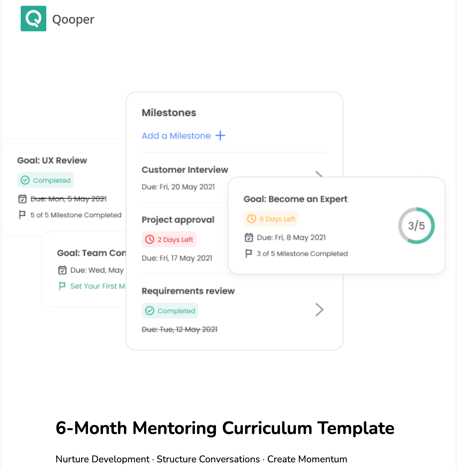
This structured 6-month curriculum template helps organizations keep mentoring focused on development outcomes, skill progression, and measurable growth rather than unstructured or purely social conversations. It provides a clear framework for guiding mentoring discussions over time, supporting consistency across cohorts and reducing variability in participant experience. The curriculum is especially effective for organizations running mentoring at scale through platforms like Qooper, where alignment, repeatability, and progress tracking are critical to program success.
Onboarding and Early-Career Mentoring
Mentoring plays a critical role in reducing early attrition.
How to Conduct an Effective Onboarding Program for New Hires
This guide outlines how structured mentoring can be embedded into onboarding programs to support faster ramp-up, stronger cross-team connections, and more consistent early performance, areas where HR teams are directly accountable. It shows how mentoring complements formal training by helping new hires navigate roles, expectations, and organizational culture more effectively during their critical first months. By linking mentoring to onboarding milestones, engagement signals, and early productivity metrics, the guide helps HR teams design onboarding experiences that reduce time-to-contribution, improve retention, and set new employees up for long-term success rather than short-term orientation completion.
Measuring Mentorship Impact: ROI, Metrics, and Reporting
If HR cannot prove value, mentoring is vulnerable.
The ROI of Mentoring Programs
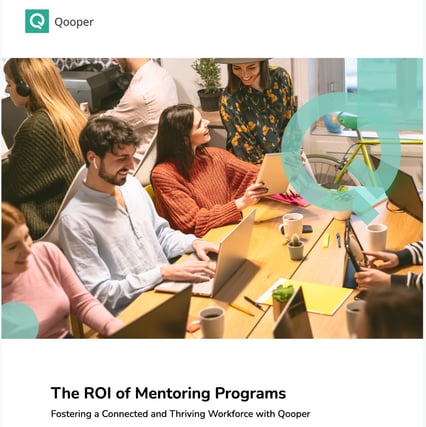
This resource breaks down how mentoring programs deliver tangible financial and operational returns, helping HR teams move beyond anecdotal success stories to evidence-based impact. It explains how mentoring influences outcomes such as retention, productivity, engagement, and internal mobility, and shows how these outcomes can be translated into leadership-ready insights. By framing mentoring as a performance and risk-management lever, the guide equips HR leaders to speak confidently about ROI in executive and budget-focused conversations.
Mentorship Program ROI Calculator
The Mentorship Program ROI Calculator provides HR leaders with a practical, structured way to estimate the business impact of mentoring initiatives. By modeling factors such as retention savings, productivity improvements, and engagement-related cost avoidance, the calculator supports more credible business cases and informed budget discussions. It enables teams to test assumptions, compare scenarios, and ground mentoring investments in numbers leadership can evaluate.
Mentoring Program Reporting Template
This reporting template helps HR teams present mentoring outcomes in a clear, consistent, and data-driven format that resonates with executive stakeholders. It supports alignment between mentoring results and broader organizational priorities by translating participation and feedback data into meaningful performance indicators. Designed for ongoing reporting cycles, the framework reinforces accountability, transparency, and continuous improvement across mentoring programs.
Qooper’s reporting capabilities are built to support this same level of transparency and executive visibility.
DEIB, ERGs, and Inclusive Mentoring Strategies
Mentoring is one of the most effective tools for advancing equity—when measured correctly.
10 DEI Metrics to Track for an Inclusive Workplace
This resource helps HR teams move from intention to accountability by identifying 10 concrete DEI metrics that track inclusion, representation, and access to opportunity across mentoring initiatives. It shows how mentoring data can be used to surface gaps in participation, progression, and visibility for underrepresented groups, rather than relying on perception-based assessments. By connecting mentoring activity to measurable DEI indicators, the guide supports more informed decision-making, stronger reporting, and clearer alignment with organizational inclusion goals.
Maximizing ROI Through ERG Programs
This guide explores how mentoring programs embedded within Employee Resource Groups (ERGs) can drive both meaningful inclusion outcomes and measurable business impact. It outlines how structured mentoring within ERGs supports talent development, internal mobility, and engagement, while also generating data that strengthens the ROI case for continued investment. By linking ERG mentoring efforts to retention, participation, and progression metrics, the resource helps HR leaders position ERGs as strategic contributors to organizational performance, not just community-building initiatives.
Cross-Generational Mentorship in a Multi-Age Workforce
With multiple generations working side by side, mentoring must be intentional.
Navigating Cross-Generational Mentorship & Closing the Generational Gap
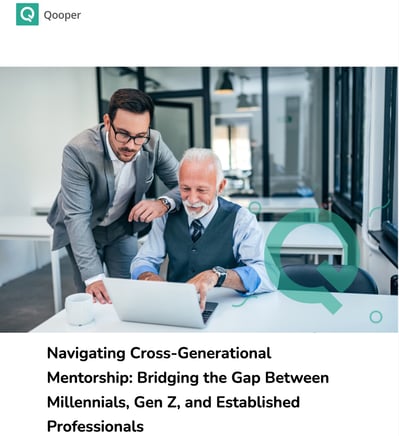
This resource helps HR and talent leaders design intentional cross-generational mentoring programs that address real differences in communication styles, work expectations, career motivations, and learning preferences across generations. Rather than assuming alignment will happen naturally, it provides practical guidance for structuring mentoring relationships that turn generational diversity into a measurable advantage.
By formalizing cross-generational mentorship, organizations can strengthen collaboration, protect institutional knowledge, and support smoother transitions as workforce demographics continue to shift.
Leadership Development and Succession Planning
Mentoring is a strategic pillar of future leadership readiness.
Developing Future Leaders: The Role of Mentorship in Succession Planning
This guide explores how structured mentorship programs can be intentionally designed to strengthen leadership pipelines and support long-term succession planning. Rather than treating mentoring as an informal development activity, it shows HR and talent leaders how to embed mentorship into leadership readiness, capability building, and internal mobility strategies.
Succession Planning for Key Roles

This resource expands the succession planning conversation beyond the executive level to focus on critical operational, technical, and functional roles that are essential to day-to-day business continuity. These roles, often overlooked, carry deep institutional knowledge and operational risk when left unmanaged.
Industry-Specific Mentoring: Healthcare and Beyond
Some sectors require tailored mentoring structures.
Running Medical Staff Mentoring Programs
This practical guide is designed for HR, medical education, and clinical leadership teams responsible for managing structured mentoring programs in healthcare environments. It addresses the unique realities of hospitals, clinics, and academic medical centers—where mentoring must operate alongside patient safety standards, clinical schedules, regulatory requirements, and professional accreditation frameworks.
The Role of Mentorship in Reskilling and Upskilling Healthcare Professionals
This resource explores how structured mentorship supports continuous learning, reskilling, and upskilling in regulated, high-stakes healthcare settings. As clinical roles evolve due to new technologies, care models, and compliance requirements, mentoring plays a critical role in translating formal training into real-world clinical competence.
Securing Leadership Buy-In for Mentorship Programs
Even the best mentoring strategy fails without executive support.
Pitch-Ready Decks for Leadership
These pitch-ready decks are designed to help HR, L&D, and People teams present mentoring initiatives in the language senior leadership expects, business impact, strategic alignment, and measurable ROI. Rather than focusing on program activity alone, the decks translate mentoring outcomes into executive-level insights that support decision-making, budget approvals, and long-term workforce planning.
Each deck is structured to connect mentoring programs with broader organizational priorities such as talent development, internal mobility, retention, succession planning, and DEIB goals. Clear visuals, concise narratives, and outcome-driven frameworks make it easier to communicate value to stakeholders who care about results, not just participation.
Mentorship Program ROI Deck
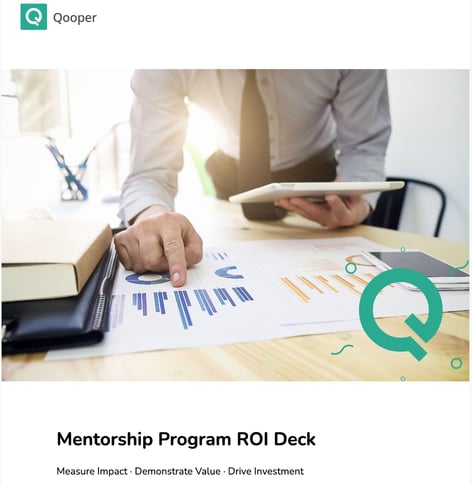
The Mentorship Program ROI Deck is a ready-to-use presentation template that enables teams to clearly showcase measurable mentoring outcomes, including skill development, promotion readiness, engagement signals, and retention indicators. It helps quantify both qualitative and quantitative impact, turning mentoring from a “nice-to-have” initiative into a defensible investment.
Built for executive audiences, the deck supports ongoing investment discussions, annual reviews, and strategic planning cycles by framing mentoring as a scalable, data-driven lever for organizational performance.
Research and Benchmarking: 2024 Mentorship Insights
Qooper Survey 2024: Mentorship Program Impact
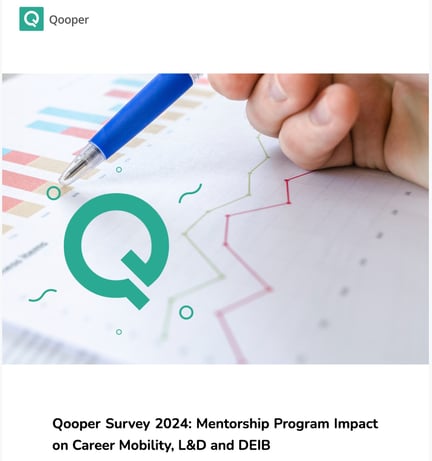
The Qooper Survey 2024 delivers in-depth, data-backed insights into how structured mentoring programs influence career mobility, leadership development, learning outcomes, and DEIB efforts across organizations of different sizes and industries. Drawing from real-world mentoring programs, the survey highlights measurable outcomes such as promotion readiness, skill progression, retention signals, and employee engagement.
Use this survey to move from assumptions to evidence, and from isolated mentoring efforts to scalable, outcome-driven mentoring initiatives.
Building a Scalable Mentoring Toolkit for HR
A true mentoring toolkit for HR doesn’t overwhelm, it orchestrates. When resources, metrics, and reporting work together, mentoring becomes a scalable, defensible capability rather than an experimental initiative.
Qooper supports organizations in bringing these elements together through a centralized mentoring platform but the principles remain the same whether you’re launching your first program or scaling globally.
Key Takeaways: Building an Effective Mentoring Toolkit for HR
- A mentoring toolkit for HR is not a single document, it is a connected system of frameworks, templates, guides, metrics, and reporting tools that support mentoring at every stage.
- Successful mentoring programs require intentional design, not informal matching or ad hoc conversations.
- Mentor–mentee matching is one of the strongest predictors of mentoring outcomes and must be data-driven.
- Integrating mentoring with learning and development initiatives significantly increases skill transfer and performance impact.
- Measuring ROI is essential for program longevity; mentoring must be tied to retention, productivity, and leadership readiness.
- DEIB and ERG mentoring programs deliver the strongest results when tracked with clear metrics and reporting frameworks.
- Structured communication, goal setting, and curriculum design prevent mentoring programs from losing momentum over time.
- Research-backed insights, such as the Qooper 2024 Mentorship Survey, help HR benchmark outcomes and build leadership trust.
- Centralized mentoring platforms like Qooper enable HR teams to scale programs without increasing administrative complexity.

Frequently Asked Questions (FAQ): Mentoring Toolkit for HR
-2.jpg)
%20(1)%20(1).webp)