



 ·
11 minute read
·
11 minute read
When an enterprise decides it needs mentoring software, one of the first questions is whether to build a custom platform internally or buy a purpose-built solution.
For most organizations, buying is the more practical choice. It provides a faster path to proven mentoring workflows, enterprise integrations, security controls, reporting, and a polished participant experience. Building can still make sense when mentoring technology is strategically unique to the organization, available products cannot support a critical requirement, and the business is willing to fund a permanent internal product team.
The decision should not be reduced to a vendor subscription versus an initial development estimate. That comparison overlooks the continuing cost of maintaining integrations, protecting employee data, supporting users, improving matching, expanding reporting, and adapting the platform as mentoring programs grow.
A reliable build-versus-buy decision evaluates four areas:
- Total cost over at least three years
- Security and operational responsibility
- The difference between program control and product ownership
- The complexity of scaling programs, integrations, and participant experiences
The goal is not to prove that building or buying is always better. It is to reveal which option gives the organization the required capabilities with an acceptable level of cost, risk, and long-term responsibility.
Build vs. Buy Enterprise Mentoring Software at a Glance
| Decision factor | Build internally | Buy a platform |
|---|---|---|
| Time to value | Longer discovery, development, testing, and approval cycle | Faster implementation using established workflows |
| Upfront investment | High product, engineering, security, and integration investment | Implementation and subscription costs |
| Control | Full code and roadmap ownership | Program control through configuration |
| Security responsibility | Organization owns the entire security lifecycle | Shared responsibility with vendor evidence and controls |
| Scalability | Must be designed, tested, and maintained internally | Available within a mature multi-program platform |
| Best fit | Unique strategic requirements with permanent product funding | Most enterprises seeking speed, reliability, and lower ownership burden |
Build internally
An internal build requires discovery, product and experience design, engineering, infrastructure, integrations, security, reporting, testing, documentation, and ongoing support. It offers full code-level control, but the organization becomes responsible for the complete product lifecycle.
Buy a mentoring platform
Buying replaces much of that development responsibility with implementation, configuration, integration, subscription, and vendor-management work. The enterprise retains control of its mentoring strategy while the vendor maintains the shared product and infrastructure.
A mature internal platform can outperform a weak vendor, while an established platform can carry far less risk than an underfunded internal project. Each option should therefore be evaluated against evidence rather than assumptions.
What Does It Really Mean to Build Mentoring Software?
A mentoring application can appear simple from the participant’s perspective. An employee completes a profile, receives a mentor recommendation, and begins scheduling meetings. Behind that journey is a much larger product.
The organization must create enrollment, profile questionnaires, matching logic, administrative permissions, communications, scheduling, relationship guidance, surveys, reporting, and support. It must also operate the less visible infrastructure expected of enterprise software: authentication, audit logging, monitoring, backups, recovery, accessibility, data retention, incident response, and vulnerability management.
Matching alone can become a substantial product area. A useful system may need to account for goals, experience, skills, seniority, location, department, preferences, exclusions, and mentor capacity. Different programs may require different weighting. Reverse mentoring, peer mentoring, onboarding, and leadership development cannot always use the same model.
Once relationships begin, participants need help sustaining them. That may involve automated introductions, agendas, calendar invitations, reminders, goals, milestones, training, conversation prompts, notes, feedback, and re-engagement workflows. Program managers also need visibility into inactive relationships, satisfaction, completion, and outcomes.
An initial prototype may demonstrate enrollment and matching. That does not make it enterprise mentoring software. It is the beginning of a product whose operational requirements will continue to expand.
What Does Buying Mentoring Software Mean?
Buying a platform does not mean outsourcing the mentoring strategy. The organization should still control its program objectives, eligible populations, branding, matching priorities, communications, governance, participant expectations, and success measures.
What the organization avoids owning is the entire software lifecycle. The vendor maintains the shared platform, develops common capabilities, supports integrations, operates infrastructure, updates the product, and provides technical support.
Building means owning both the mentoring program and the software product. Buying allows the organization to own the program while using established technology to operate it. Enterprises often discover that what they need is program control rather than source-code ownership.
Define the Future Requirement Before Comparing Options
The first version of a mentoring initiative rarely represents its final scope. A 200-person leadership cohort may expand into onboarding, career development, reverse mentoring, peer mentoring, succession planning, employee communities, or frontline mentoring. Regional teams may eventually require separate administrators, languages, privacy rules, and matching criteria.
The requirements should describe the next three to five years, not only the first launch. The evaluation team should determine how many programs may run simultaneously, which formats are required, whether each program needs separate matching and communications, and which data each administrator may access.
Participant requirements deserve equal attention. A global workforce may need mobile access, multilingual interfaces, accessibility support, flexible scheduling, and asynchronous participation. The technology map should cover HRIS, identity, calendar, video, communication, learning, survey, and analytics systems.
Compare Total Cost of Ownership, Not the First Invoice
Purchased software costs are visible because they appear in a proposal. Internal development costs are less visible because they are distributed across employees, infrastructure, security, legal, data, and shared technology teams. That difference can make an internal build appear artificially inexpensive.
| Cost and ownership area | Build | Buy |
|---|---|---|
| Product and engineering | Permanent internal staffing | Included in vendor platform roadmap |
| Infrastructure and reliability | Designed and operated internally | Covered by subscription and service commitments |
| Integrations | Custom development and maintenance | Existing connectors plus configuration |
| Security and compliance | Full internal testing, monitoring, and evidence | Vendor controls reviewed through due diligence |
| Support and enhancement | Internal backlog and service desk | Vendor support and continuous product updates |
| Exit cost | Migration from proprietary internal architecture | Contract, export, and transition planning |
Internal-build cost
Build TCO equals discovery and design, development, infrastructure, integrations, security and compliance, support, maintenance, enhancements, administration, and opportunity cost.
The estimate should include product management, experience design, engineering, testing, security reviews, accessibility work, analytics, documentation, and support. Maintenance should not be treated as a small residual expense. HRIS APIs change, authentication requirements evolve, dependencies develop vulnerabilities, and program owners request new workflows and reports.
Purchased-platform cost
Buy TCO equals implementation, subscription, configuration, integrations, administration, change management, renewal adjustments, and exit costs.
Buying has costs beyond the license. Enterprises may need to clean and migrate data, configure programs, connect systems, train administrators, launch communications, and manage the vendor relationship. The difference is that a purchased solution allows the organization to evaluate a defined product and contract.
Opportunity cost may be decisive. Engineering time assigned to mentoring software cannot simultaneously be spent on customer products, revenue-generating systems, or other workforce priorities. Qooper’s mentoring program cost guide provides additional context for expenses beyond the platform itself.
Compare Time to Value
Time to value begins when the organization approves the initiative and ends when employees receive a useful, reliable mentoring experience. An internal build must pass through requirements, governance, design, architecture, development, integrations, testing, security review, accessibility testing, pilot deployment, and production approval.
A purchased platform still requires procurement, security review, configuration, integration, training, and change management. The difference is that its core workflows have already been developed. The relevant question is not how quickly a team can demonstrate an application, but when it can safely launch a complete experience that employees and program managers can depend on.
Treat Security as an Operating Responsibility
Mentoring platforms may contain employee identity data, work histories, development goals, organizational relationships, survey responses, and records of mentoring activity. They should be reviewed with the same rigor as other enterprise HR systems.
An internal solution can be secure, and a purchased platform can be insecure. With an internal build, the organization must design and continuously operate secure development, authentication, permissions, encryption, monitoring, penetration testing, vulnerability remediation, backups, incident response, retention, and deletion.
With a purchased platform, responsibility is shared. The vendor operates platform controls, while the customer examines evidence, configures access appropriately, and establishes its own data-governance rules. The NIST Secure Software Development Framework and OWASP Application Security Verification Standard provide useful reference points for this evaluation.
Qooper states that its enterprise platform supports SSO, role-based access, encryption, penetration testing, data-retention and deletion practices, business continuity, incident response, SOC 2 Type I and Type II certification, and GDPR compliance. Buyers should verify applicable evidence through the Qooper Trust Center during their own review.
Security evidence to request
- Independent audit reports and current penetration-test evidence
- Identity, SSO, role, and administrator-permission documentation
- Encryption, retention, deletion, backup, and recovery procedures
- Incident-response responsibilities and notification commitments
- Subprocessor, data-location, and privacy-governance details
Separate Program Control From Product Ownership
Program control includes the ability to define eligibility, profile questions, matching criteria, communications, surveys, administrator permissions, milestones, reports, and branding. These controls may be available through configuration.
Product ownership is broader. It includes responsibility for architecture, code, infrastructure, releases, security, integrations, testing, documentation, support, and the future roadmap. Building is defensible when that ownership creates durable strategic value.
The argument is weaker when the desired differentiation consists mainly of branding, custom questions, matching weights, reporting fields, or integrations with common systems. Those requirements matter, but they do not necessarily require owning the underlying software.
Evaluate Matching as a Complete System
Matching should not be evaluated as a single algorithm. A production system must translate program strategy into consistent decisions across goals, skills, experience, seniority, location, department, preferences, exclusions, and mentor capacity.
Different programs need different logic. Leadership development may emphasize experience and career goals. Peer mentoring may emphasize shared challenges and career stage. Reverse mentoring may intentionally cross seniority levels. An onboarding program may prioritize role, location, or functional knowledge.
Ask both the internal team and vendors whether matching criteria can change by program, whether criteria can be weighted, whether mandatory exclusions and capacity limits are supported, whether administrators can review and override recommendations, and whether match quality can be measured after launch.
Qooper’s mentor matching platform provides configurable profile questions, matching criteria and weights, algorithmic recommendations, administrator review, manual adjustment, and automated introductions. These capabilities provide a practical benchmark for estimating an internal matching scope.

Evaluate the Entire Participant Experience
Good matching does not guarantee a productive relationship. Mentors and mentees still need to know how to begin, what to discuss, how to set goals, and what to do when momentum declines.
A complete experience may include introductions, scheduling, calendar invitations, agendas, goals, milestones, conversation prompts, training resources, reminders, notes, surveys, and support. Together, these features determine whether participants continue using the program.
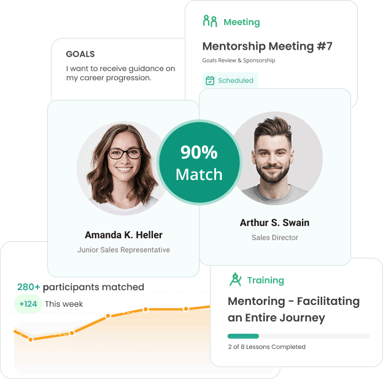
Qooper’s mentoring app supports matching, chat, scheduling, calendar integration, training, structured next steps, goals, milestones, notes, and feedback. An internal estimate should include comparable experience design and testing wherever those capabilities are required.
Evaluate Integrations as Ongoing Products
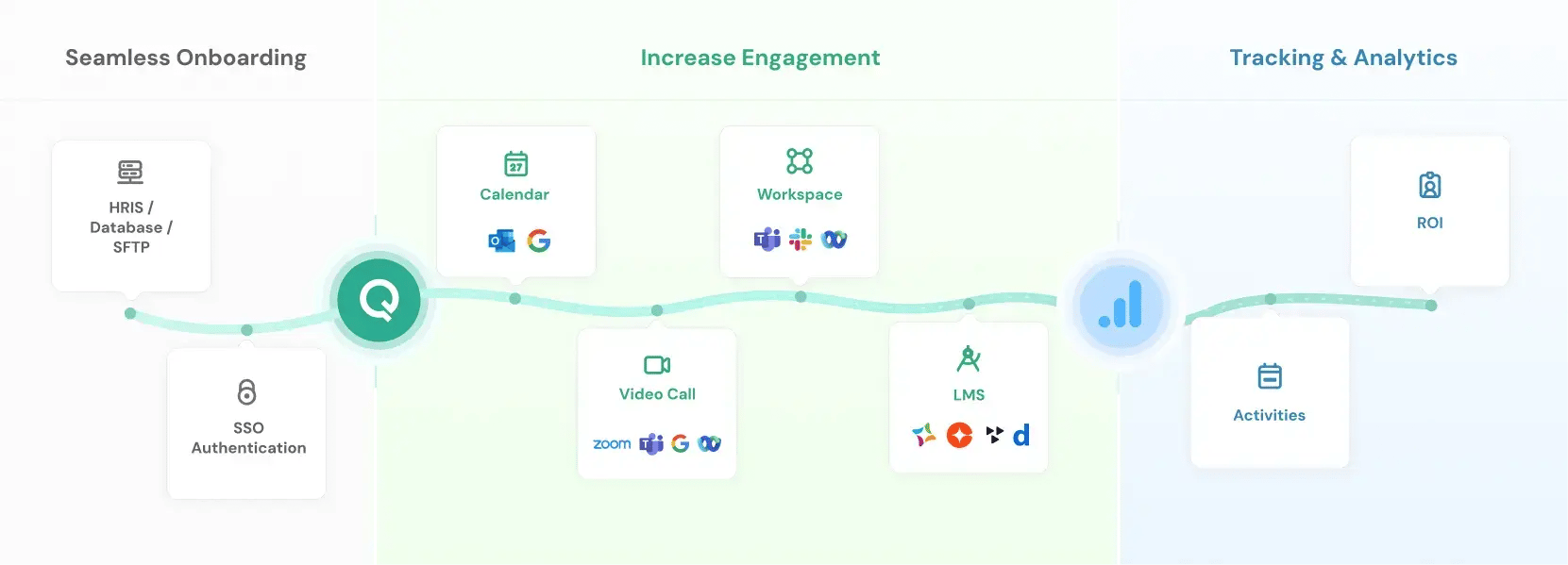
An integration is not finished when two systems exchange data successfully once. A reliable connection needs authentication, field mapping, validation, monitoring, error handling, retry logic, documentation, and support. It must also adapt when the source system changes.
For each connection, document the system of record, data fields, direction, update frequency, provisioning behavior, failure handling, support owner, audit requirements, and retention implications.
Qooper’s integration directory covers HRIS, identity, calendars, video, communications, LMS, surveys, SFTP, and related systems. Its site lists Workday, BambooHR, SAP SuccessFactors, UKG, ADP, Oracle, Microsoft Teams, Outlook, GSuite, Zoom, Webex, Salesforce, Cornerstone, SSO, and SFTP. Buyers should verify exact connector behavior during technical evaluation.
Model Scale as Complexity, Not Only User Count
Enterprise scale involves more than participant volume. Complexity increases when the organization adds programs, administrator groups, matching models, business units, languages, integrations, reports, and regional governance requirements.
Both options should be tested against realistic scenarios: a pilot growing from 200 to 5,000 participants, several business units launching different programs, mentors leaving mid-program, HRIS changes affecting eligibility, leaders requesting cross-region reporting, and privacy requests requiring data export or deletion.
Qooper states that its interface, mentoring steps, and learning content are available in more than 30 languages. Its multi-language mentoring capability provides a relevant benchmark for global requirements.
Compare Reporting and Analytics
Basic reporting shows how many people registered. Enterprise reporting should reveal whether relationships are active, whether participants are progressing, and whether the initiative is creating organizational value.
A useful measurement model covers operational health, participant experience, and organizational outcomes. An internal build must create the event model, surveys, dashboards, permission rules, filters, exports, and reporting workflows behind those measurements.
Qooper’s reporting and analytics tools support program and individual progress, participant feedback, pre-, mid-, and post-program surveys, configurable filters, custom reporting, HRIS-connected data, and ROI analysis. These capabilities should be assessed against the organization’s measurement plan.
Use a Weighted Decision Scorecard
A scorecard makes assumptions visible. Assign each criterion an importance weight, score both options from one to five, multiply the score by the weight, and require evidence for every rating.
| Criterion | Suggested weight | Evidence to request |
|---|---|---|
| Three-to-five-year total cost | 20% | Staffing model, fees, maintenance, and opportunity cost |
| Security and privacy | 20% | Controls, testing, certifications, retention, and incident response |
| Matching and participant experience | 15% | Demo, configurability, mobile journey, and adoption data |
| Integrations | 15% | Connector behavior, ownership, monitoring, and support |
| Reporting and analytics | 10% | Dashboards, surveys, exports, permissions, and ROI reporting |
| Scale and reliability | 10% | Multi-program, regional, language, and volume scenarios |
| Time to value and support | 10% | Implementation plan, service levels, and support model |
The weights should reflect organizational priorities. A regulated multinational enterprise may place more weight on security, integrations, governance, and localization. A smaller organization may emphasize speed and administrative simplicity.
Five-Step Build-versus-Buy Evaluation Process
Use the same evidence standard for the internal team and every vendor so the comparison remains neutral.
- Define the three-to-five-year program scope, participant populations, and success measures.
- Document functional, security, integration, accessibility, and reporting requirements.
- Build a complete cost model that includes staffing, maintenance, support, and opportunity cost.
- Score both options against realistic growth, failure, and governance scenarios.
- Validate assumptions through technical review, demonstrations, references, and a controlled pilot.
When Building Makes Sense
Building is credible when mentoring technology is deeply connected to a proprietary talent system and the organization gains strategic value from owning it. The strongest cases have a validated requirement that available products cannot meet, a funded product owner and engineering team, accepted security and integration responsibilities, and leadership commitment to continued investment.
Building may also be appropriate for a deliberately limited experiment. In that case, the organization should identify the solution as a prototype, define its boundaries, and decide in advance what happens if the program grows.
When Buying Is Usually the Better Choice
Buying is normally stronger when mentoring supports the organization’s goals but developing mentoring software does not differentiate the business. The case becomes particularly strong when the organization must launch on a defined timeline, support several programs, integrate with enterprise systems, pass security review, provide mobile access, operate internationally, or produce consistent reporting with a small team.
Buying still requires disciplined evaluation. The organization should verify configuration depth, integration behavior, accessibility, security evidence, reporting, service levels, data portability, and exit provisions.
Evidence Checklist for the Final Decision
| Area | Internal-build evidence | Vendor evidence |
|---|---|---|
| Delivery | Roadmap, staffing, dependencies, and launch date | Implementation plan, responsibilities, and timeline |
| Product fit | Prototype and prioritized backlog | Configured demonstration using real scenarios |
| Operations | Support model, monitoring, recovery, and ownership | Service levels, support process, status history, and continuity |
| Data | Schema, permissions, retention, and reporting design | Data flows, exports, deletion, analytics, and portability |
| Scale | Load tests and multi-program architecture | Customer references and verified scale scenarios |
How Qooper Compares With an Internal Build
Qooper brings together many capabilities an enterprise would otherwise need to design, develop, test, secure, and maintain. Its verified product pages describe configurable matching, administrator controls, guided participant journeys, mobile access, reporting, surveys, HRIS and workplace integrations, more than 30 languages, enterprise security controls, and customer success and technical support.
This comparison should not replace a product demonstration or technical review. It shows why Qooper should be evaluated against the complete planned internal product, not only against the first version of a matching workflow.
The Bottom Line
An enterprise should build mentoring software when the technology itself creates strategic differentiation and the organization is ready to operate a permanent software product. It should buy when it needs a dependable way to deliver mentoring but gains little strategic value from developing authentication, matching administration, relationship workflows, integrations, mobile experiences, analytics, security controls, and support infrastructure internally.
For most organizations, the objective is not to become excellent at developing mentoring software. It is to make mentoring accessible, structured, secure, measurable, and scalable. That usually makes buying the more practical choice.
Why Evaluate Qooper Before Approving an Internal Build?
Qooper already combines configurable mentor matching, administrative controls, structured participant journeys, automation, mobile access, reporting, integrations, multilingual support, and enterprise security capabilities in one platform.
Evaluating Qooper gives the organization a concrete reference point for its internal scope. It can reveal which requested capabilities already exist, which needs can be met through configuration, and how much custom development is actually necessary.
Bring your internal requirements to a Qooper demo and compare matching, security, integrations, reporting, participant experience, implementation, and long-term ownership before assigning engineering resources.
Frequently Asked Questions
Is it cheaper to build or buy mentoring software?
Buying is usually less expensive when the calculation includes product management, design, development, infrastructure, integrations, security, maintenance, support, and future enhancements. Building may be economical when the organization already possesses the necessary platform and teams and the custom capability creates meaningful strategic value.
How long does it take to build enterprise mentoring software?
A limited matching workflow can be developed much faster than a production enterprise platform. The meaningful milestone is production readiness, including identity, integrations, communications, analytics, mobile access, accessibility, security, testing, documentation, and support.
Does buying mentoring software mean losing control?
Not necessarily. An organization can retain control over strategy, eligibility, matching rules, branding, communications, permissions, surveys, reporting, and governance while the vendor maintains the underlying product.
Is internally developed mentoring software more secure?
Not automatically. Internal ownership provides direct control, but it also makes the organization responsible for secure development, monitoring, testing, remediation, incident response, backups, and audit evidence. A purchased platform should be evaluated through documentation and testing rather than accepted on trust.
Can Qooper integrate with an existing HR technology stack?
Qooper lists integrations across HRIS, identity, calendars, video, communications, LMS, surveys, and secure data transfer. The organization should verify the exact data, synchronization direction, frequency, error handling, and support model for each required connection.
What is the best first step in a build-versus-buy evaluation?
Create a vendor-neutral requirements map and a three-to-five-year total-cost model. Then ask the internal product team and potential vendors to respond to the same requirements, security controls, operational scenarios, and cost categories.
.svg)
.webp)