




Introduction: Why a Structured Buddy Program Matters
A strong New Hire Buddy Program is more than a social initiative, it is a structured intervention that directly impacts retention, engagement, productivity, and cultural integration. The first 90 days shape how employees perceive their role, their team, and the organization’s culture. Without intentional support, new hires often struggle to decode informal norms, build networks quickly, and gain early confidence.
This blueprint provides a practical, operational framework for building a scalable and measurable program. It incorporates best practices aligned with Qooper’s new hire onboarding program, which helps organizations automate matching, streamline workflows, and track outcomes in real time.
Step 1: Define Clear Program Objectives
Before designing logistics, clarify why the program exists. Buddy programs fail when they are created as “nice-to-have” initiatives without defined outcomes. The most successful programs are explicitly tied to business goals — such as improving 90-day retention, accelerating time-to-productivity, or strengthening belonging in remote environments.
Start by identifying current onboarding pain points. Are new hires overwhelmed? Are managers carrying too much onboarding responsibility? Is engagement dipping early? Use this diagnosis to define 3–5 measurable goals.
Example Objective Alignment
|
Business Challenge |
Program Objective |
Example KPI |
|
High early attrition |
Improve 90-day retention |
+10% retention |
|
Slow ramp-up |
Accelerate productivity |
Reduce ramp time by 20% |
|
Low belonging scores |
Increase connection |
+15% engagement score |
The output of this step should be a clear mission statement, defined KPIs, and an executive sponsor who publicly supports the initiative.
Step 2: Define Roles & Expectations
Clarity creates confidence. When buddies are unsure of their responsibilities, participation becomes inconsistent. When new hires misunderstand the relationship, meetings feel transactional or forced.
A buddy is not a manager, trainer, or evaluator. They are a cultural translator and informal guide. Their role is to provide social integration, answer practical questions, offer perspective, and help the new hire navigate unwritten rules.
Managers should reinforce the importance of the relationship without micromanaging it. HR or People Ops owns oversight, measurement, and continuous improvement.
Role Overview
|
Role |
Core Responsibility |
Time Commitment |
|
Buddy |
Social & cultural guidance |
~1 hr/week |
|
New Hire |
Active participation |
~1 hr/week |
|
Manager |
Reinforce & align |
~30 min/month |
|
HR |
Monitor & optimize |
Ongoing |
Step 3: Design the Program Structure
Structure prevents early enthusiasm from fading. A defined 30-60-90-day framework provides rhythm and clarity while allowing organic connection.
The first phase should focus on comfort and clarity. During the early weeks, conversations are often centered around first impressions, role understanding, and practical navigation. As the relationship progresses, discussions should shift toward confidence-building, stakeholder introductions, and long-term development.
Sample 90-Day Framework
|
Phase |
Focus |
Intended Outcome |
|
Pre-Day 1 |
Warm welcome |
Reduced anxiety |
|
Week 1 |
Orientation support |
Immediate connection |
|
Weeks 2–4 |
Role clarity |
Early confidence |
|
Month 2 |
Network expansion |
Stronger belonging |
|
Month 3 |
Growth & reflection |
Long-term engagement |
Step 4: Develop Matching Criteria
Matching quality significantly influences program success. While random assignment may work in small organizations, scaling requires thoughtful criteria.
Compatibility can be based on department, career interests, tenure, location, communication style, or shared experiences. Some organizations intentionally pair cross-functionally to broaden exposure, while others match within teams for faster role clarity.
Matching Considerations
|
Criteria |
Why It Matters |
|
Functional alignment |
Role-specific insight |
|
Career interests |
Development support |
|
Time zone/location |
Scheduling ease |
|
Background/ERG alignment |
Inclusion & belonging |
Manual matching offers personalization but becomes difficult at scale. Automated matching systems, such as those supported within Qooper’s new hire onboarding program, enable configurable criteria, reduce bias, and significantly lower administrative burden.
Step 5: Build a Buddy Enablement Toolkit
Even high-performing employees may feel unsure about being a buddy. Enablement materials reduce hesitation and standardize quality.
Instead of overwhelming buddies with dense manuals, provide concise, practical resources: a welcome email template, a first-meeting guide, suggested conversation prompts, and a clear outline of what to do if concerns arise.
Training does not need to be extensive. A short 30-minute orientation covering active listening, inclusive behaviors, and boundary setting can dramatically improve confidence.
Sample First Meeting Agenda
|
Agenda Item |
Duration |
|
Introductions & background |
10 mins |
|
Role overview |
10 mins |
|
Culture insights |
10 mins |
|
Questions & next steps |
15 mins |
The goal is not perfection — it is preparation.
Step 6: Launch & Communicate the Program
A buddy program’s success depends heavily on perception. If positioned as optional or informal, engagement drops. If presented as a strategic investment in employee success, participation rises.
Launch communication should articulate the business case and cultural value. Executives should endorse it publicly. Managers should reinforce its importance during team onboarding.
Stakeholder Messaging Map
|
Audience |
Key Message |
|
Executives |
Strategic retention lever |
|
Managers |
Shared onboarding support |
|
Employees |
Leadership development opportunity |
|
New Hires |
Built-in support system |
Automated communication workflows within mentoring platforms can trigger invitations, reminders, and milestone nudges, ensuring consistency across cohorts.
Step 7: Integrate with Onboarding Workflow
The buddy relationship should not feel like an add-on. It should be embedded into onboarding from the moment the offer is accepted.
Ideally, matching occurs immediately after acceptance, allowing the buddy to send a welcome message before Day 1. Early connection reduces anxiety and strengthens first-day experience.
Integration Timeline
|
Onboarding Milestone |
Buddy Action |
|
Offer Acceptance |
Match assigned |
|
Pre-boarding |
Intro email |
|
Day 1 |
Kickoff meeting |
|
Day 30 |
Check-in |
|
Day 90 |
Reflection & closure |
Step 8: Measure, Report & Optimize
Measurement transforms a cultural initiative into a strategic program. Without data, executive support weakens.
Track participation rates, meeting completion, satisfaction scores, and retention impact. Combine quantitative metrics with qualitative feedback to understand the full picture.
Sample Dashboard Metrics
|
Metric |
Target |
|
Participation rate |
>85% |
|
Meeting completion |
>75% |
|
90-day retention |
+10% |
|
Satisfaction score |
4.5/5 |
Platforms like Qooper provide centralized dashboards, automated surveys, and reporting capabilities that simplify impact tracking and executive reporting.
Step 9: Scale & Sustain the Program
Once the pilot proves successful, scaling requires governance and recognition systems. Programs often lose momentum when they rely on a few enthusiastic champions.
Consider expanding to specialized tracks such as executive onboarding, ERG-aligned buddies, or global cohorts. Recognize high-performing buddies through awards, internal spotlights, or professional development incentives.
Annual reviews should revisit objectives, update KPIs, refine training, and secure renewed executive sponsorship.
Technology Enablement: Scaling with Confidence
As organizations grow, manual coordination becomes inefficient and inconsistent. Leveraging Qooper’s new hire onboarding program allows teams to:
- Automate smart matching
- Trigger structured workflows
- Monitor engagement in real time
- Send automated nudges
- Collect structured feedback
- Generate executive-ready reports
This ensures consistency, scalability, and measurable ROI without increasing administrative workload.
Embedding Structure and Accountability into Your New Hire Buddy Program
Establishing clear, structured objectives within a New Hire Buddy Program ensures the relationship delivers meaningful, measurable outcomes. While buddy connections are informal by nature, their purpose should align with business goals such as accelerating onboarding, improving early retention, strengthening belonging, or supporting diverse talent. Clear expectations and defined milestones create accountability and shared direction.
By aligning on goals and tracking progress through 30-, 60-, and 90-day checkpoints, organizations foster stronger relationships while maintaining visibility into onboarding success. This balance between structure and authenticity accelerates confidence, productivity, and engagement.
With Qooper’s new hire onboarding program, organizations can further enhance impact through intelligent matching, built-in milestone tracking, automated reminders, and continuous feedback mechanisms. Investing in a scalable, structured solution not only elevates the new hire experience but also strengthens long-term talent development and organizational culture.
Why Leading Organizations Choose Qooper for New Hire Buddy Programs
Scaling a structured buddy program manually can quickly become complex. As organizations grow, coordinating matches, tracking engagement, sending reminders, and reporting outcomes becomes time-consuming and inconsistent.
Qooper’s New Hire Onboarding Buddy Program provides the technology foundation to automate, measure, and scale your initiative with confidence.
Key Platform Capabilities
Pair Up New Hires with an Onboarding Buddy
Move beyond spreadsheets and manual assignments. Automatically match new hires with onboarding buddies using configurable criteria such as department, career interests, location, or shared experiences — ensuring compatibility while reducing HR workload.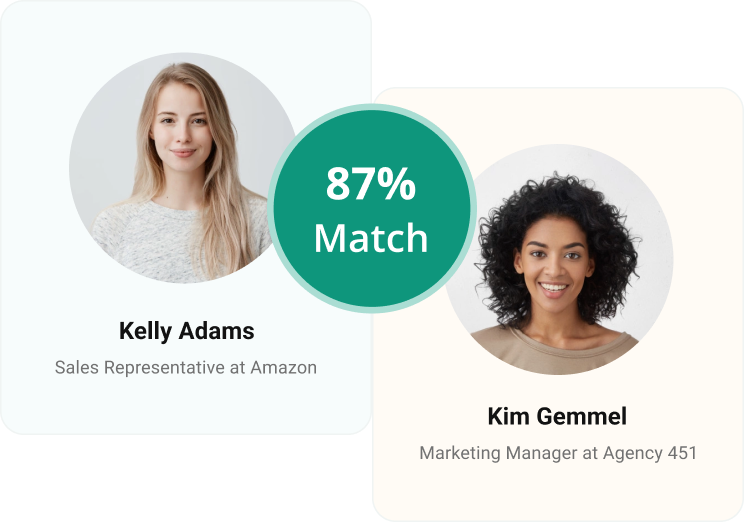
Auto-Deliver Your Onboarding Materials
Set it once and let the platform handle the rest. Automatically deliver onboarding materials on a predefined cadence directly to new hires’ inboxes, ensuring consistent communication and timely access to resources.

Create Onboarding Exercises & Next Steps Automatically
Generate structured onboarding exercises, conversation prompts, and milestone-driven next steps automatically. Guide new hires through a clear, engaging 30-60-90-day journey without manual coordination.
Track Participation & Measure Outcomes on a Live Dashboard
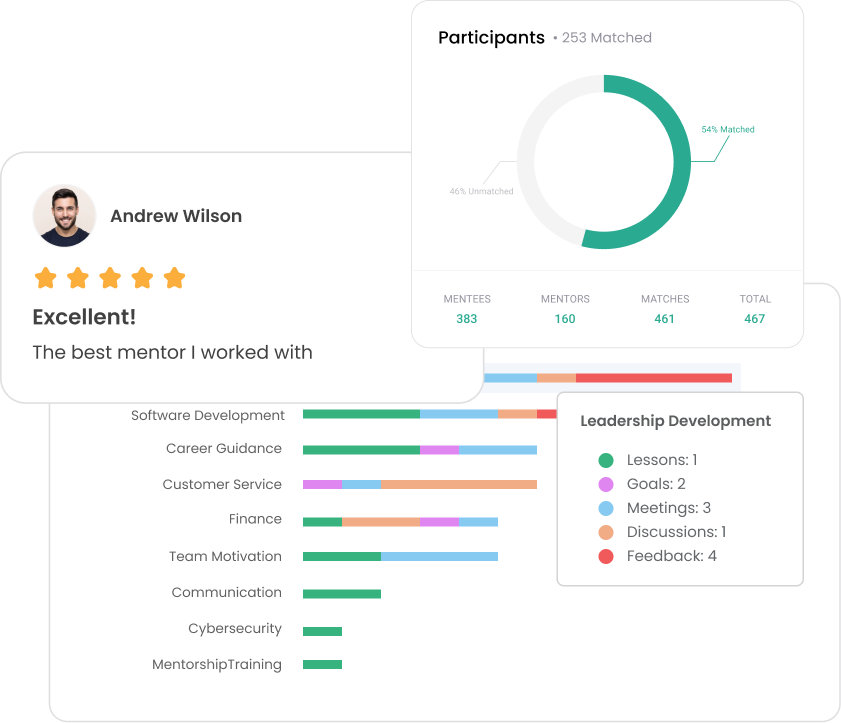
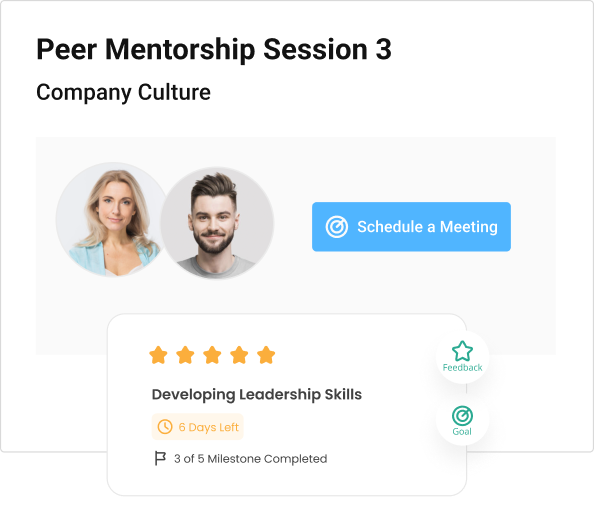
Gain real-time visibility into engagement. Monitor buddy meeting completion, participation rates, survey responses, and onboarding satisfaction through a centralized dashboard — empowering continuous optimization and executive-ready reporting.