
















A Mentoring System Built for Scalable Workforce Development
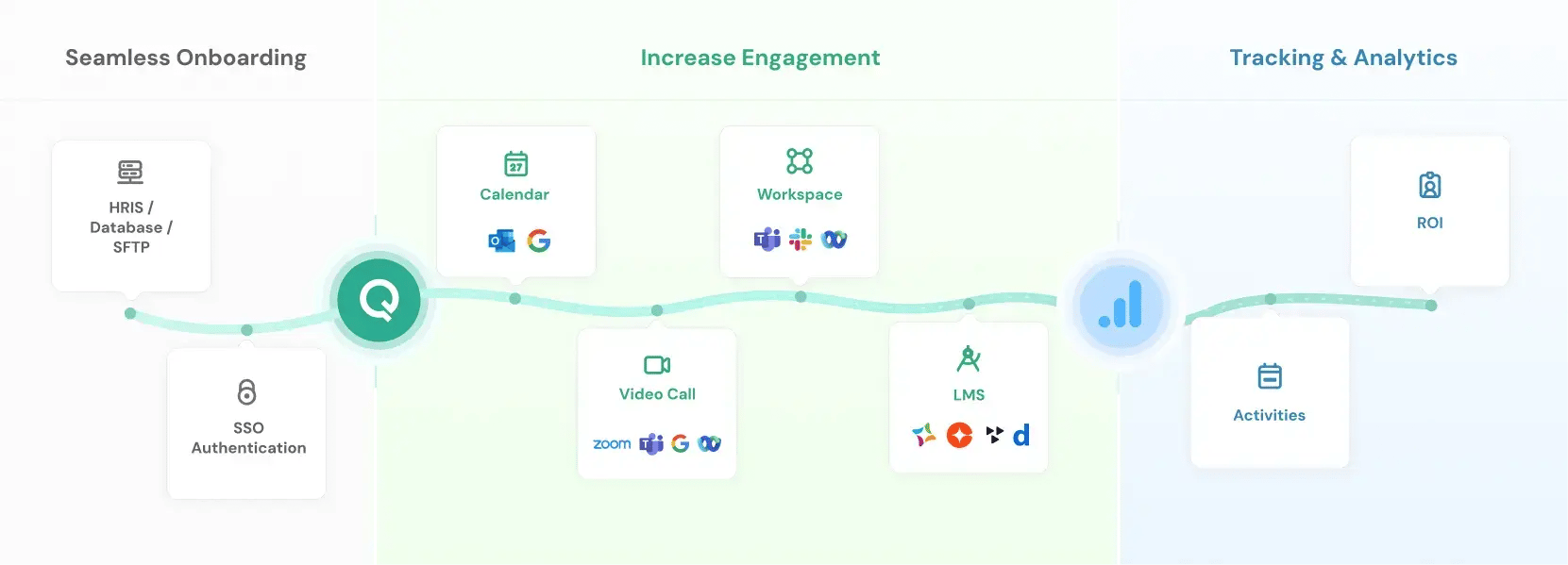
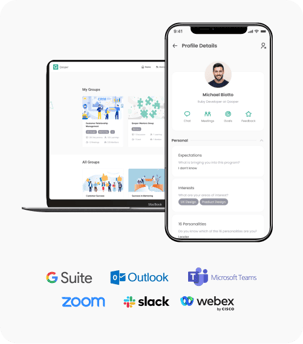
Qooper provides a centralized mentoring system to standardize mentor matching, meetings, goals, and reporting. Designed for HR and L&D teams who need visibility, consistency, and proof of impact across the organization.

Structured, algorithm-driven matching
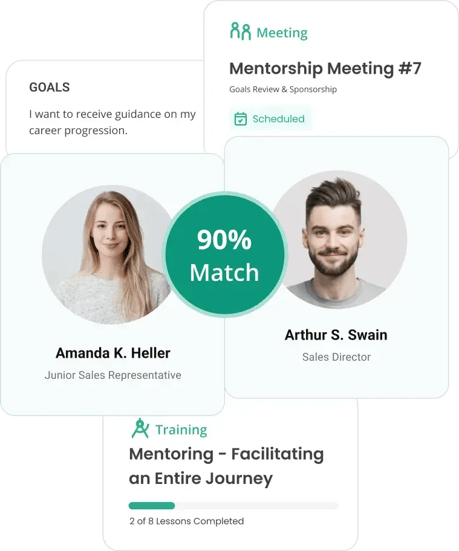
Mentor and mentee profiles are collected through standardized surveys and processed through Qooper’s matching logic to recommend pairings aligned with program goals, experience, and availability.
Standardized mentorship meeting management
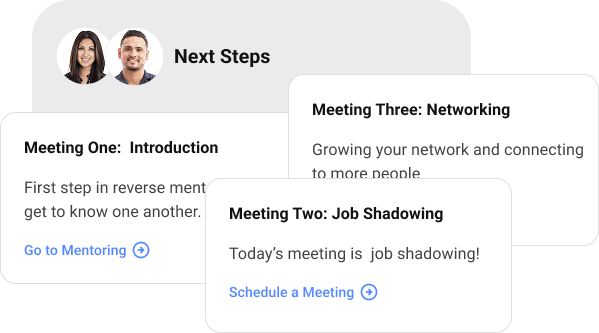
Unstructured mentoring meetings create friction and inconsistency across programs. Qooper provides built-in tools to standardize scheduling, discussion flow, and documentation—so mentoring interactions are easier to manage and easier to oversee.
Goal and progress tracking across mentoring programs
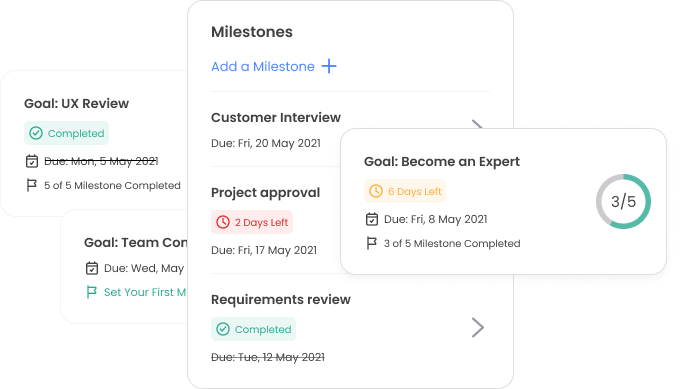
Qooper enables structured goal setting and milestone tracking so administrators can monitor progress, identify stalled engagements, and ensure mentoring activity stays aligned with program objectives.
Centralized feedback and documentation
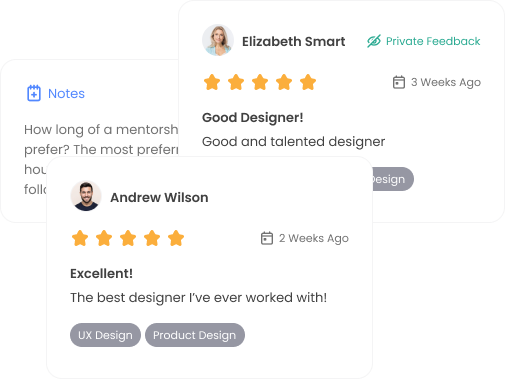
Qooper provides a centralized space for mentors and mentees to share feedback and record notes, supporting both private reflections and program-level documentation within a single mentoring system.
Standardized guidance across mentoring programs
Apply consistent agendas, templates, and surveys across mentoring engagements, reducing variability while supporting reliable execution at scale.
Embedded mentorship training resources
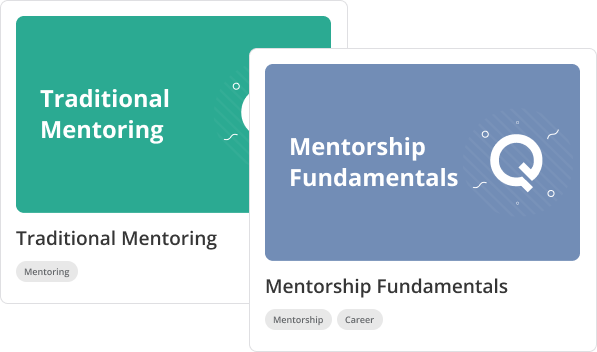
Qooper provides built-in mentorship training resources to support mentor and mentee readiness, helping programs establish a consistent baseline for effective participation.
Verified participation and program completion
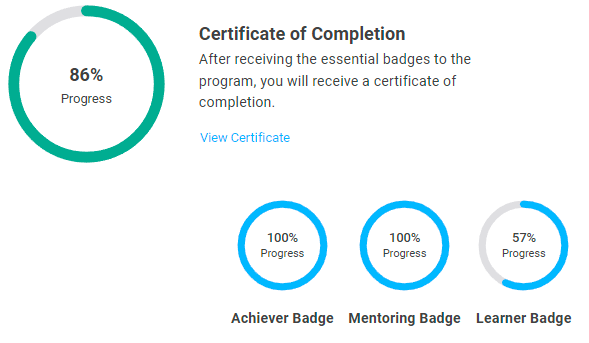
Mentoring milestones, meetings, and training completion are tracked within the system, allowing organizations to recognize participation and confirm program completion with certificates or badges.
#1 Rated Software, Service & Integrations For
Mentorship & Learning
Starting a Mentorship Program? Qooper is easy-to-use!
"Qooper has everything you need to get a mentorship program off the ground, no custom development or heavy lifting required. It's easy to implement, simple to navigate as an administrator, and provides a seamless experience for both mentors and mentees with its intuitive user interface. Highly recommend."

Lea B.Tommy Bahama
Support from day one.
"Thank you for being an excellent partner who has supported us from day one, following up and keeping us up to date with the new features, preparing a business case for us (which is extremely helpful for me because you have done half of my job), providing suggestions, and assisting me in managing our program despite our small team."

Cindee P.Cotiviti
Matched with the right mentor, engaged every step of the way!
"Qooper's matching algorithm paired me with the perfect mentor during Northwell's Inaugural Mentorship Program – what we now call the world's best algorithm, because it was spot on! It made the entire mentoring journey feel personalized and intentional from day one."

Dani L.Northwell Health


FAQ
What is a mentoring system and how does it support organizations at scale?
How does a mentoring system support different types of mentorship programs?
Mentoring systems support a wide range of program models, including virtual mentoring, peer mentoring, reverse mentoring, faculty mentoring, flash mentoring, blended mentoring, mentoring circles, and small group mentoring programs. Each format follows a configurable mentoring framework while maintaining consistent oversight, documentation, and evaluation.
How are mentors and mentees matched within the system?
Mentor–mentee pairs are created using a structured matching algorithm that analyzes profile data, mentoring roles, skills gaps, availability, preferences, and program objectives. Administrators can review match requests, adjust the pairing process, and ensure mentorship matches align with both participant needs and organizational priorities.
How does a mentoring system improve mentoring relationships and performance?
By standardizing mentoring processes—such as meeting agendas, reflection conversations, and feedback processes—mentoring systems reduce friction and improve relationship quality. This structure supports trust, self-confidence, positive relationships, and measurable improvements in performance, resilience, and professional development outcomes.
Can mentoring systems support student and academic mentoring programs?
Yes. Mentoring systems are widely used in academic settings to support students, teachers, faculty, medical students, and research mentoring programs. They enable structured supervision, instructionally focused mentoring, peer tutoring, co-teaching models, scaffold strategies, and tracking of student performance and achievement across academic and professional learning cycles. Check out Qooper University Mentoring solution now.
How do mentoring systems support medical education and research mentoring?
In medical schools and medical education programs, mentoring systems help manage faculty mentoring, research supervision, clinical skill development, and mentorship needs for medical students. Structured mentoring hours, documented learning cycles, and qualitative feedback support academic progress, confidence, and long-term career goals.
How does mentoring technology support diversity, inclusion, and equity goals?
Mentoring systems support diversity and inclusion by standardizing access to mentorship opportunities, reducing bias in pairing processes, and ensuring consistent engagement across participants. Transparent mentoring evaluation and analytics help organizations identify gaps, protective factors, and risk factors that affect participation and program outcomes.
What features are essential in a modern mentoring system?
Key features include structured mentor matching, standardized meeting management, goal and milestone tracking, embedded mentorship training, centralized documentation, virtual meeting tools, video conferencing integrations, analytics dashboards, and mentoring evaluation tools that combine data analysis with qualitative feedback.
How does a mentoring system support coaching and career development?
Mentoring systems complement coaching and career coaching by supporting skill-building, reflection conversations, and professional learning aligned with career goals. Structured mentoring techniques help participants close skills gaps, improve employee experience, and strengthen long-term talent development strategies.
Can mentoring systems support virtual and remote mentoring programs?
How is mentoring success measured within the system?
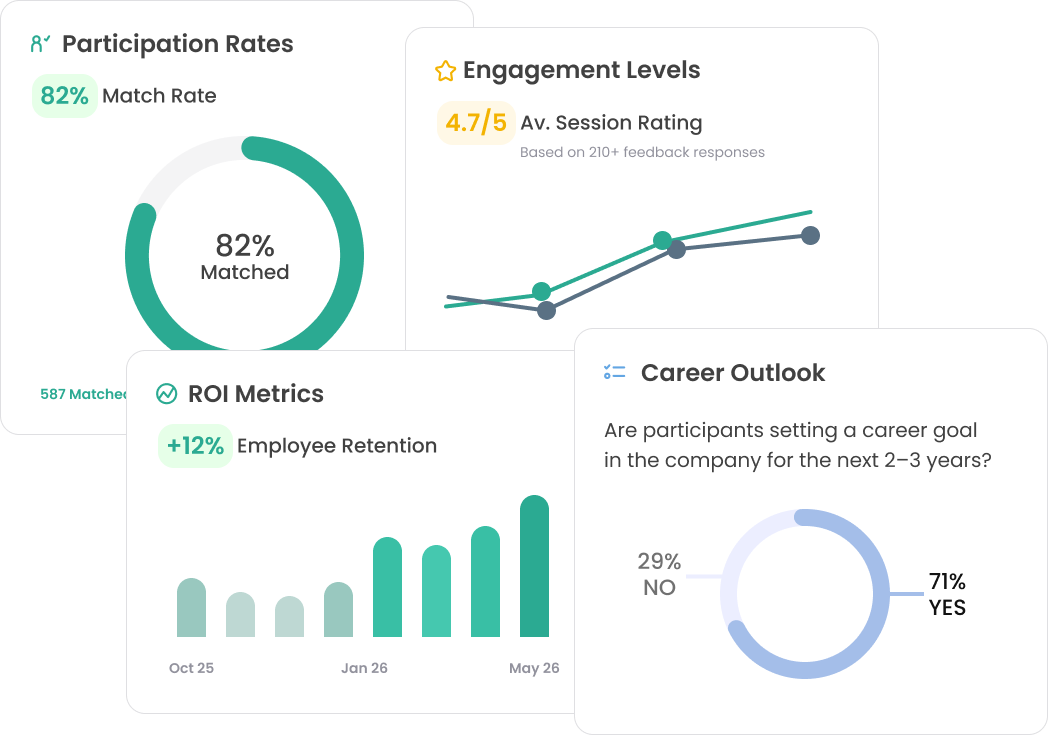
Program success is measured through mentoring analytics that track participation, mentoring hours, milestone completion, learning progress, and engagement trends. Data analytics are combined with qualitative feedback, reflection notes, and surveys to provide a holistic view of mentoring effectiveness.
Who typically uses mentoring systems within an organization?
Mentoring systems are used by HR leaders, L&D teams, business owners, faculty administrators, program managers, and community program leaders. These stakeholders rely on mentoring systems to build a strong business case, demonstrate impact, and align mentoring initiatives with organizational culture.
How do mentoring systems support peer support and co-learning programs?
Mentoring systems enable peer mentoring, peer support programs, and co-learning programs by providing structured pairing, shared learning cycles, and collaborative reflection tools. These programs strengthen social interactions, cross-functional collaboration, and knowledge sharing across teams or cohorts.
How does a mentoring system integrate with talent marketplaces?
Mentoring systems can complement internal talent marketplaces by identifying skills gaps, facilitating mentorship matches, and supporting developmental pathways. This creates a continuous loop between mentoring, performance development, and workforce mobility.
How does standardized mentoring improve employee and student experience?
Standardized mentoring reduces uncertainty by providing clear expectations, structured guidance, and consistent support. Participants benefit from clearer roles, better supervision, stronger relationships, and a reliable student support system or employee development experience.
Why are mentoring systems critical for long-term organizational success?
Mentoring systems transform mentoring from isolated relationships into a measurable, scalable strategy. By aligning mentoring with organizational goals, performance development, and culture, mentoring systems support sustainable growth, workforce resilience, and long-term impact.
Want to explore more?
Discover how Qooper can help your organizational goals and people development today.