




 ·
7 minute read
·
7 minute read
A successful organization doesn’t just hire talent, it develops it. Leadership Mentoring Programs are one of the most effective ways to nurture emerging leaders, build confidence, and drive long-term organizational growth. These programs combine structured mentorship, leadership training, and relationship-based learning to strengthen both leadership and mentoring skills.
Beyond basic leadership skills, modern programs focus on research-backed methods, innovation in learning design, and continuous assessment to ensure measurable professional development and real organizational impact.
In this article, we’ll explore what Leadership Mentoring Programs are, why they matter, how to design and measure them effectively, and how Qooper Mentoring Software helps organizations scale mentoring for leadership development.
What Are Leadership Mentoring Programs?
A Leadership Mentoring Program connects experienced leaders (mentors) with rising professionals (mentees) to guide their leadership development journey. Unlike traditional training, leadership mentoring emphasizes one-on-one relationships, goal setting, and ongoing feedback.
In a mentoring relationship, mentors share career insights, challenge mentees to think critically, and model leadership competencies such as communication, decision-making, and inclusion.
These relationships strengthen communication skills, active listening, and interpersonal skills while fostering knowledge-sharing across teams and departments.
Core Elements of Leadership Mentoring Programs:
- Goal setting: Define leadership competencies and career development targets.
- Smart matching: Pair mentors and mentees based on skills, experience, and goals.
- Structured relationship management: Define terms, meeting frequency, and metrics.
- Tracking and analytics: Measure program effectiveness through engagement, promotion rates, and satisfaction.
Many organizations align these elements with a Leadership Competency Model to connect mentoring outcomes directly to strategic goals and business challenges.
Why Leadership Mentoring Programs Matter
Strong leaders don’t appear overnight; they’re cultivated through continuous learning, exposure, and feedback. Mentoring for leadership ensures that organizations always have capable, confident leaders ready to take on critical roles. By strengthening the talent pipeline and improving employee engagement, mentoring directly contributes to organizational productivity, teamwork, and customer satisfaction.
Key Benefits of Leadership Mentoring Programs:
- Succession planning: Prepares future leaders to fill key positions.
- Employee engagement: Builds a sense of connection and purpose among participants.
- Career development: Enhances leadership competencies, executive presence, and self-confidence.
- Diversity and inclusion: Provides equal access to leadership opportunities for all employees.
- Organizational culture: Creates a culture of collaboration, learning, and accountability.
A well-designed leadership mentoring program fosters a dynamic learning environment that promotes long-term growth and impactful leadership across all career stages. It also supports positive change and behavioral change, helping leadership teams adapt to evolving organizational structures and change management initiatives.
Leadership Mentoring vs. Coaching and Training
While coaching focuses on performance and short-term goals, leadership mentoring programs emphasize long-term development through relationship-based learning. Training provides knowledge; mentoring ensures application and reflection.
Mentorship builds leaders by promoting strategic thinking, confidence, and empathy, all essential leadership and mentoring skills examples.
When combined with a digital coaching platform or virtual leadership programs, mentoring becomes a scalable solution that blends coaching sessions, seminars, and experiential learning.
Related article: Coaching vs Mentoring: Differences, Benefits, and Strategies to Growth
Components of an Effective Leadership Mentoring Program
1. Define Leadership Competencies and Program Goals
Clearly identify and articulate the specific leadership competencies your organization seeks to enhance. These may include crucial areas like critical thinking skills, effective communication techniques, and strategic decision-making abilities. Establish measurable objectives to ensure that the activities between mentors and mentees align closely with your organization's overarching business goals. These competencies often include business acumen, management acumen, ethical leadership, empowering others, and strategy execution.
2. Smart Matching and Relationship Management
Use a data-driven matching process that considers career level, professional goals, and learning styles. Programs using smart matching algorithms, like those in Qooper, see higher satisfaction and stronger mentor relationships. Advanced platforms leverage AI advancement and behavioral science to create personalized learning journeys and improve matching accuracy across global cohorts.
3. Provide Mentoring Tools and Training Resources
Mentors and mentees benefit greatly from having a well-defined structure and robust support systems in place. Providing comprehensive training resources, such as mentoring templates and structured guidance on essential skills like communication, feedback, and goal setting, is crucial. Additionally, utilizing digital mentoring tools can significantly streamline program management. These tools not only simplify the administrative aspects of mentoring programs but also boost engagement among participants by making interactions more accessible and efficient. These resources may include online programs, leadership training subscriptions, dialogue-based learning modules, and experiential exercises that reinforce foundational knowledge.
4. Encourage Feedback and Reflection
Mentoring thrives on trust and open communication. Encourage both mentors and mentees to share constructive feedback regularly. Reflection during mentoring sessions enhances professional self-confidence and fulfillment. Structured self-examination and leadership profiles help participants clarify their personal leadership philosophy and authentic leadership journey.
5. Track Metrics and Evaluate Program Effectiveness
Track success using meaningful metrics such as participation rates, leadership readiness, and career progression. Use analytics to evaluate whether your leadership mentoring program contributes to long-term career goals and organizational outcomes. Regular assessment dashboards enable leadership teams and C-suite stakeholders to connect mentoring investments directly to strategic challenges and business plans.
Models of Leadership Mentoring Programs
Biannual Cohort Model
Organizations often run mentoring cohorts every six months. Each cohort pairs mentors and mentees, allowing structured networking, leadership workshops, and reflection sessions. These cohorts often include networking events, seminars, and cross-functional teamwork to strengthen collaboration and effective teamwork.
Reverse and Reciprocal Mentoring
Senior and junior employees mentor each other, sharing expertise across generations and business functions. This exchange of ideas builds empathy and adaptability. The interdisciplinary approach encourages innovation, learning pattern innovation, and fresh perspectives across the leadership team.
Related article: Reverse Mentoring to Fill The Generation Gap: A Comprehensive Guide
E-Mentoring and Digital Mentorship
Modern mentoring platforms like Qooper Mentoring Software enable E-mentoring, connecting global participants through communication tools, analytics, and automated reminders. As a global technology platform, Qooper supports virtual leadership programs that connect distributed professional staff across regions and time zones.
Speed Mentoring
Short, focused sessions help mentees connect with multiple mentors in a short period, ideal for large organizations or associations looking to expand their mentoring network. This format is especially effective during conferences, clubs, podcasts, and large-scale leadership techniques workshops.
Best Practices for Running Leadership Mentoring Programs
- Define success early. Establish clear objectives and measurable outcomes.
- Engage leadership. Encourage executive leaders to participate as mentors or champions.
- Promote inclusivity. Include employees across career stages, departments, and backgrounds.
- Communicate often. Use social media channels and internal newsletters to celebrate success stories.
- Leverage technology. Platforms like Qooper automate matching, goal tracking, and analytics, ensuring program scalability.
Embedding mentoring into organizational culture ensures long-term knowledge-sharing, stronger teamwork, and sustained employee engagement.
How to Design an Effective Leadership Mentoring Program
Creating a successful Leadership Mentoring Program requires more than pairing mentors and mentees, it demands strategy, structure, and continuous improvement. Here’s how organizations can design programs that drive measurable results and long-term leadership development.
1. Identify Leadership Goals and Competencies
Start by defining the leadership and mentoring skills your organization wants to build, such as strategic thinking, communication, or executive presence. These competencies guide every stage of your program design.
2. Develop a Clear Matching Strategy
A strong matching process determines the success of your mentoring relationships. Use algorithmic smart matching to pair participants based on role, career level, business function, and goals. Tools like Qooper Mentoring Software make this process seamless and data-driven.
3. Build Structure and Flexibility
Establish specific timelines, determine how often sessions will occur, and define the terms of the mentoring relationship, such as using a 6-month period or opting for biannual cohort models. Nonetheless, it's important to allow for flexibility within these plans, as mentoring relationships naturally evolve and grow stronger through the development of mutual trust and the pursuit of shared objectives.
4. Incorporate Training Resources
Provide comprehensive resources for both mentors and mentees, guides, communication templates, and e-learning modules. This ensures that every participant understands expectations and can build strong, supportive relationships.
5. Integrate Analytics and Feedback Loops
Monitor engagement, goal completion, and skill improvement through analytics dashboards. Qooper’s integrated reporting tools allow you to measure program effectiveness and continuously improve future mentoring relationships.
6. Foster a Culture of Ownership and Connection
Motivate both mentors and mentees to actively take responsibility for their own personal and professional growth throughout the mentorship process. Cultivate a strong sense of connection and community by organizing cohort events, facilitating engaging discussions in forums, and leveraging digital communication tools to foster continuous interaction and relationship building.
When designed with these elements in mind, Leadership Mentoring Programs become not just a learning initiative but a strategic driver of organizational success.
Leadership Mentoring in Different Industries
Healthcare: Leadership mentoring programs in the healthcare profession rely heavily on dedicated healthcare leader volunteers. Mentorship here supports leadership competencies like empathy, communication, and decision-making, crucial for patient outcomes. Medical schools, academic health systems, medical students, and residency programs increasingly adopt mentoring to build human care skills and ethical leadership.
Education: Mentoring tools and training resources enhance teacher leadership, foster networking, and strengthen educational observances like volunteer leadership initiatives. Educational Leadership initiatives often include faculty development, personalized learning paths, electives, certificates, and specialized programs designed for students and professional staff.
Corporate: In business environments, mentoring and leadership programs support succession planning, cross-functional collaboration, and professional visibility. Organizational Leadership programs help general management teams tackle strategy execution, executive decisions, and complex business challenges through design thinking and experiential learning.
How Qooper Mentoring Software Elevates Leadership Mentoring Programs
Organizations often struggle with manual matching, low engagement, and limited visibility into outcomes. Qooper Mentoring Software simplifies the process through:
- Smart matching algorithms: Automate the pairing process to ensure ideal mentor matches.
- Program management tools: Manage multiple cohorts, enrollment, and reporting seamlessly.
- Analytics & dashboards: Track engagement, goal progress, and program effectiveness.
- Communication & training tools: Facilitate ongoing connection, feedback, and skill development.
- Scalability: Run global, cross-functional, or volunteer mentoring programs with ease.
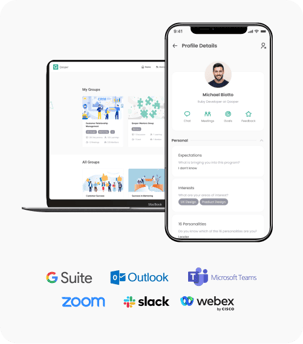
As a comprehensive mentoring platform, Qooper integrates mentoring, coaching sessions, and leadership training into one centralized experience that supports personalized learning journeys at scale. Qooper transforms leadership mentoring programs into scalable, measurable, and engaging experiences, ensuring impactful leadership development at every career stage.
Key Takeaways
- Leadership Mentoring Programs develop future-ready leaders through structured, goal-oriented mentorship.
- Smart matching processes, analytics, and mentoring tools make programs more effective.
- Diverse models like reverse mentoring and E-mentoring create inclusive growth opportunities.
- Measuring outcomes through metrics and analytics ensures long-term success.
- Qooper Mentoring Software simplifies program management, automates matching, and tracks leadership growth at scale.
-
Together, these practices are redefining leadership by blending human experience, technology, and evidence-based Leadership Development Studies.
Why Leadership Mentoring Programs Are Essential
Leadership Mentoring Programs are no longer optional, they’re essential to building a strong, future-ready workforce. By connecting experienced leaders with emerging talent, organizations create a culture of learning, confidence, and collaboration.
With Qooper Mentoring Software, you can streamline every aspect of your program—from smart matching and analytics to communication and progress tracking. Whether you’re designing your first mentoring initiative or scaling an existing one, Qooper provides everything you need for sustainable leadership development.
👉 Start your leadership mentoring journey today. Request a demo of Qooper Mentoring Software and empower your organization’s next generation of leaders.
FAQ
What role does a mentor play in leadership development?
Mentors guide mentees through goal setting, feedback, and skill-building. They model effective leadership behaviors, helping mentees develop confidence, resilience, and executive presence.
Is mentoring leadership or a support function?
Mentoring is both, a leadership behavior that supports others’ growth. Great leaders mentor to strengthen their team’s competencies and build a legacy of impactful leadership.
How long should a leadership mentoring program last?
Most organizations find success with programs lasting 6–12 months or running as biannual cohorts, allowing time for meaningful relationship building and measurable growth.
How can technology improve leadership mentoring programs?
Tools like Qooper streamline matching, enable virtual meetings, and track metrics, making mentoring scalable, data-driven, and easy to manage.
What makes an ideal mentor in leadership programs?
An ideal mentor demonstrates empathy, critical thinking skills, and a growth mindset. They encourage reflection, share experience, and challenge mentees to reach their long-term career goals.
.png)

-Jul-16-2026-12-45-50-2352-PM.png)