




Employee Onboarding Checklist
A Structured, Mentoring-Integrated Onboarding Framework

A Mentoring-Driven Framework for Structured Employee Integration
An effective employee onboarding process is not a single event. It is a structured journey that transforms a candidate into a confident, productive, and culturally aligned contributor.
Organizations that treat onboarding as paperwork experience slower ramp time, lower engagement, and higher early-stage turnover. In contrast, companies that design onboarding intentionally — integrating mentoring, performance clarity, and human connection — build long-term retention and leadership pipelines.
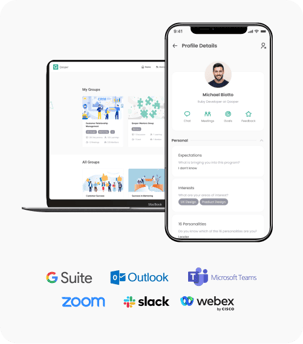
This Employee Onboarding Checklist is designed to help organizations create a measurable, mentoring-powered onboarding experience using Qooper.
Phase 1: Pre-Onboarding (Offer Acceptance → Day 1)
1. Administrative & Compliance
☐ Send offer confirmation and welcome email
☐ Collect signed contract
☐ Collect NDAs and legal documentation
☐ Share tax forms and payroll documentation
☐ Provide access to HR systems
☐ Add employee to HRIS
☐ Prepare employee file
Mentoring Integration
☐ Assign onboarding mentor in Qooper
☐ Match based on department, goals, or skill alignment
☐ Define mentoring objectives for first 30–60 days
☐ Schedule first mentor meeting (before Day 1 if possible)
2. Equipment & System Access
☐ Provision laptop and equipment
☐ Create email account
☐ Set up Slack/Teams access
☐ Grant access to role-specific software
☐ Confirm security training completion
☐ Test login credentials
3. Culture & Connection Preparation
☐ Send welcome packet (digital or physical)
☐ Share employee handbook
☐ Share company mission, values, and vision
☐ Introduce team via email or internal channel
☐ Announce start date internally
☐ Add employee to team meetings
Mentoring Integration
☐ Share onboarding roadmap in mentoring platform
☐ Outline expected outcomes for first 90 days
☐ Provide reflection prompts in Qooper
Phase 2: Day 1 Experience
4. First-Day Structure
☐ Welcome meeting with HR
☐ Manager 1:1 meeting
☐ Team introduction session
☐ Office tour or virtual orientation
☐ Review onboarding agenda
☐ Clarify role expectations
Critical Question to Answer on Day 1:
“What does success look like here?”
5. Mentoring Kickoff
☐ Conduct first mentor session
☐ Align on personal development goals
☐ Discuss communication cadence
☐ Set measurable milestones
☐ Define accountability checkpoints
Phase 3: Week 1 (Foundation & Clarity)
6. Role-Specific Enablement
☐ Review job description in detail
☐ Outline key responsibilities
☐ Share KPIs and success metrics
☐ Provide access to past reports or projects
☐ Shadow team member
☐ Assign first small task
7. Culture & Cross-Functional Exposure
☐ Meet key stakeholders
☐ Attend cross-team meeting
☐ Review company strategy presentation
☐ Understand customer persona
☐ Learn internal communication norms
Mentoring Checkpoint
☐ Review Week 1 experience
☐ Identify challenges
☐ Adjust development focus
Phase 4: First 30 Days (Confidence Building)
8. Performance Alignment
☐ Define 30-60-90 day goals
☐ Deliver first meaningful project
☐ Receive structured feedback
☐ Conduct manager check-in
☐ Identify skill gaps
9. Mentoring Development Plan
☐ Set 3–5 development goals
☐ Track mentoring milestones
☐ Document progress in Qooper
☐ Complete first feedback reflection
☐ Evaluate engagement level
Measure engagement early — disengagement starts silently.
Phase 5: 60-Day Progress Review
10. Integration Assessment
☐ Assess role clarity
☐ Evaluate performance trajectory
☐ Review cultural integration
☐ Conduct pulse survey
☐ Identify support gaps
Mentoring Checkpoint
☐ Review mentor-mentee relationship effectiveness
☐ Adjust development roadmap
☐ Expand network connections
Phase 6: 90-Day Milestone (Full Integration)
11. Formal Evaluation
☐ 90-day performance review
☐ Feedback from peers
☐ Self-assessment completion
☐ Confirm long-term goals
☐ Identify leadership development path
12. Mentoring Continuation or Transition
☐ Evaluate mentoring outcomes
☐ Transition from onboarding mentoring to career mentoring
☐ Set long-term growth plan
☐ Expand mentoring network if needed
Onboarding ends. Development doesn’t.
Key Success Metrics to Track
To make this checklist strategic rather than operational, track:
- Time to productivity
- Ramp time reduction
- Early engagement score
- First 90-day retention rate
- Mentoring session completion rate
- Goal completion rate
- Feedback quality score
If you are not measuring these, you are guessing.
Conclusion
Effective employee onboarding does not happen by accident. It is designed. Structured. Measured. And intentionally supported.
When onboarding is guided by clear milestones, defined success metrics, and embedded mentoring, new hires gain more than information — they gain confidence, clarity, and connection. Goal-oriented mentoring during onboarding creates accountability, accelerates ramp time, and strengthens early engagement when it matters most.
By aligning expectations, tracking development progress, and facilitating continuous feedback, organizations transform onboarding from an administrative process into a strategic growth engine.
With Qooper, this process becomes scalable and measurable. Intelligent mentor-mentee matching, structured goal tracking, and integrated feedback tools ensure that onboarding is not only completed — but optimized.
Investing in a structured, mentoring-driven onboarding experience strengthens retention, reinforces culture, and builds the foundation for long-term talent development
Want to explore more?
Discover how Qooper can help your organizational goals and people development today.