




 ·
6 minute read
·
6 minute read
Universities are among the most complex organizations to run mentoring in. A single institution supports thousands of students, faculty, staff, and alumni across colleges, departments, campuses, and time zones, often with different teams owning different programs. That combination of scale and complexity is exactly why higher education needs purpose-built, enterprise-grade mentoring software rather than spreadsheets, email chains, or lightweight tools that break under load.
This guide covers why universities invest in mentoring software, what to look for when evaluating platforms, the types of programs a university typically runs, and, with two real institutions, what scaling mentoring actually looks like in practice.
Why Universities Invest in Mentoring Software
Mentoring is one of the most evidence-backed levers a university has for student success, career outcomes, and alumni engagement. The research is consistent across decades of studies.
|
2.2× Higher odds of being engaged at work for graduates who had a mentor who encouraged their goals (Gallup-Purdue Index) |
~22% Share of graduates who strongly agreed they had such a mentor — meaning most did not (Gallup, 2014) |
68.2% National first-year college retention rate, 2023–2024 (NCES) |
The Gallup-Purdue Index, one of the largest studies of U.S. college graduates ever conducted, found that alumni who had a mentor who cared about them and encouraged their goals were more than twice as likely to be engaged in their work and thriving in their well-being years later. Yet only about one in five graduates strongly agreed they had that kind of mentor, a striking gap between the impact mentoring delivers and how often students actually experience it.
The pattern holds on retention and completion. Peer mentoring programs have been shown to improve first-year retention and four-year graduation rates, with especially strong effects for under-represented and first-generation students, making mentoring a practical tool for closing equity gaps, not just improving averages. On career guidance specifically, the Strada-Gallup Alumni Survey found that advice from a faculty mentor was rated meaningfully more helpful than advice from a career services office, underlining how much the mentoring relationship itself matters.
For a university, that translates into concrete institutional priorities:
- Student retention and success — keeping first-year, transfer, and at-risk students connected and supported through their most vulnerable terms.
- Equity and belonging — giving first-generation and under-represented students the social capital and guidance their peers often already have.
- Career readiness and outcomes — pairing students with alumni and faculty who can translate a degree into a career path.
- Alumni engagement and giving — turning graduates into active mentors, which deepens their long-term relationship with the institution.
- Faculty and staff development — onboarding new hires and supporting early-career faculty through structured mentorship.
The Real Challenge: Mentoring at University Scale
Most universities already believe in mentoring. The hard part is running it well across a large, decentralized institution. Informal mentoring and manual coordination tend to fail in predictable ways:
- Matching doesn’t scale. Hand-matching a few dozen pairs is manageable; matching hundreds or thousands of students against mentors by goals, field, background, and availability is not.
- Programs are siloed. Student affairs, career services, alumni relations, DEI, the graduate school, and individual colleges often each run disconnected efforts with no shared data.
- Relationships stall after the match. A good pairing means little if participants don’t know what to do next. Engagement drops without structure, reminders, and guidance.
- Impact is invisible. Without reporting, program owners can’t show leadership whether mentoring is moving retention, engagement, or career outcomes — which makes budget renewal a fight.
- Student data privacy is on the line. Mentoring programs touch protected student records, so any platform has to meet the institution’s security and governance requirements.
The University of South Dakota’s experience is a textbook example: a 12-student manual pilot made clear that hand-matching and coordination simply would not scale to a campus-wide program — the trigger for moving to dedicated infrastructure.
What To Look For in Mentoring Software for Universities
When you evaluate mentoring platforms for higher education, these criteria separate a tool that launches a pilot from one that scales across the institution.
1. Matching quality at scale
Look for configurable, algorithm-assisted matching that considers goals, field of study, career interests, background, and availability — with the ability to review, approve, or adjust matches. Strong matching is the single biggest predictor of a relationship that actually works.
2. Ease of use and mobile access
Students live on their phones and alumni are busy professionals. If participants can’t connect, message, set goals, and schedule from a phone in a few taps, engagement collapses.
Related Article: Mobile Mentoring For Reaching the Whole Workforce, Not Just the Desk
3. Multi-program administration
A university rarely runs one program, it runs many. The platform should let different departments launch and manage their own programs from one system, with shared reporting for leadership.
4. Structured guidance beyond the match
The best platforms provide mentorship training, meeting agendas, goal templates, feedback prompts, and automated reminders so participants know what to do before, during, and after each session.
5. Reporting and outcome measurement
Track participation, engagement, relationship health, goal progress, and survey feedback — and connect that activity to institutional outcomes like retention, satisfaction, and career readiness.
6. Integrations and single sign-on
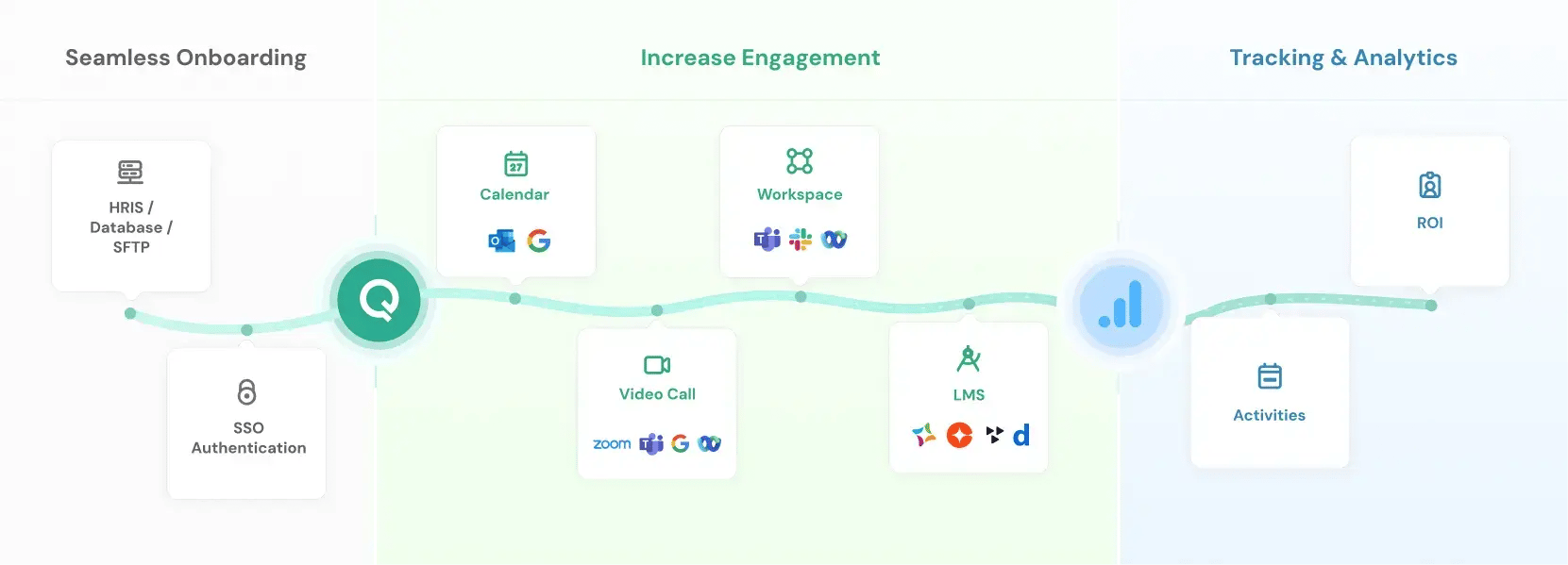
Prioritize SSO and identity integration so students log in with campus credentials, plus calendar and video integrations for scheduling and secure data-transfer options for syncing participant lists.
7. Security and student-data privacy
Because programs handle protected student records, the platform must offer independent security attestations, role-based access control, secure authentication, encryption, and clear data-retention and deletion practices to support regulations like FERPA.
8. Implementation and ongoing support
Higher-ed teams are stretched thin. Guided onboarding, best-practice templates, and a dedicated success contact make the difference between a program that launches on time and one that stalls in setup.
Types of University Mentoring Programs One Platform Should Support
A capable platform lets a single institution run many mentoring models side by side:
- Student peer mentoring — upper-year students supporting first-year, transfer, or first-generation students to drive retention and belonging.
- Alumni–student career mentoring — connecting current students with graduates for career guidance, networking, and readiness. These mentoring relationships can also help students build broader career readiness competencies such as communication, professionalism, career management, and relationship-building before they enter the workforce.
- Faculty and research mentoring — pairing students with faculty, and early-career faculty with senior colleagues.
- Graduate and professional student mentoring — supporting the distinct needs of master’s, doctoral, and professional-program students.
- DEI and belonging programs — structured relationships that expand access and close equity gaps for under-represented groups.
- Onboarding and staff development — welcoming new students, faculty, and staff into the institution.
Why Universities Choose Qooper
Qooper is enterprise mentoring software trusted by 300+ enterprise organizations — including Fortune 500 companies such as Google, VF Corporation, Tommy Bahama, HOK, Matthews International, and Rentokil — with thousands of users across 500+ mentoring programs. That same enterprise infrastructure makes Qooper a strong fit for higher education: the University of South Dakota used Qooper to grow from a 12-student manual pilot into a unified, campus-wide student–alumni program — with every pilot-cohort mentor returning the following term — while Weill Cornell Medicine scaled its PrIMES diversity mentoring program from 60 to 600 participants on the platform.
Universities are, in software terms, complex enterprises: large populations, decentralized ownership, strict data governance, and a need to prove outcomes to leadership. Qooper is built for exactly that environment.
- Matching that scales. Configurable workflows, approvals, and match suggestions across goals, field, interests, background, and availability — pairings hold up whether you match 100 students or 10,000.

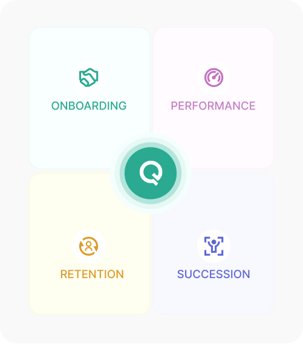
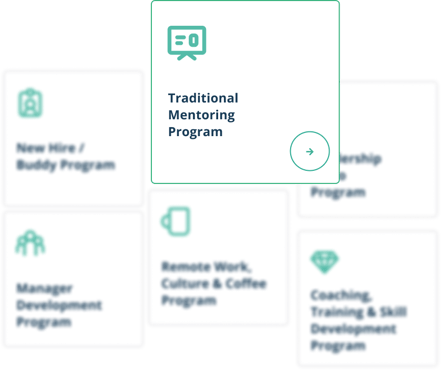
- Many programs, one platform. Student, alumni, faculty, graduate, DEI, and onboarding programs run from a single admin interface, in 1:1, group, and circle formats.
- Structure beyond the match. Mentorship training, meeting agendas, goal and feedback templates, and automated reminders keep relationships active all term.
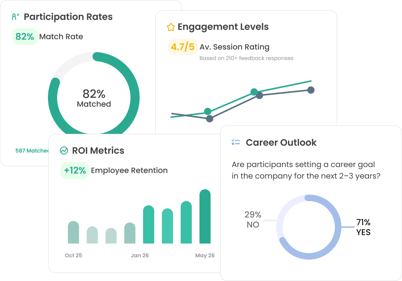
- Reporting connected to outcomes. Visibility into participation, engagement, relationship progress, skill development, and survey feedback — the evidence needed to demonstrate ROI to deans and leadership.
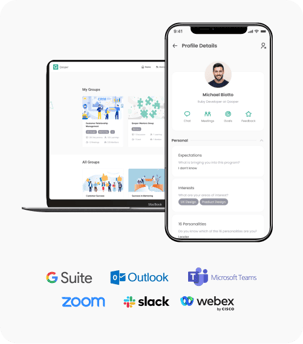
- Enterprise integrations and SSO. Connects with SSO and identity providers (including Okta, Microsoft Entra, and Azure AD), Google and Outlook calendars, Zoom, Microsoft Teams, and Webex, Slack and Teams for communication, and supports secure SFTP-based data transfers.
- Security and governance for student data. Qooper has completed SOC 2 Type I and Type II attestations, supports GDPR requirements with a Data Processing Agreement, and provides SSO/SAML, role-based access control, encryption, and defined data-retention and deletion practices — the controls universities need to protect student records under regulations like FERPA.
- Multi-language support for global campuses. Support for more than 30 languages helps universities deliver a consistent experience to international students.
- Hands-on implementation and support. A dedicated customer success manager, live kickoff support, best-practice templates, and mentorship training resources help higher-ed teams launch quickly.
See Qooper in action
Run student, alumni, and faculty mentoring at scale — with matching, structured guidance, outcome reporting, and enterprise-grade security. See how Qooper supports mentoring programs across your institution.
Frequently Asked Questions
Is there mentoring software built specifically for universities?
Universities are best served by enterprise mentoring software that can handle their scale, decentralized program ownership, and data-governance requirements — configured for higher-education use cases like student, alumni, and faculty mentoring. The most important factors are matching quality, multi-program administration, outcome reporting, integrations, and student-data security, rather than a “student-only” label.
How does mentoring improve student retention?
Mentoring increases a student’s sense of connection and support, which research consistently links to higher retention and graduation rates — with especially strong effects for first-generation and under-represented students. Peer and faculty mentoring provide guidance, accountability, and belonging during the terms when students are most at risk of leaving.
Can one platform run student, alumni, and faculty mentoring at the same time?
Yes. A university-ready platform lets different departments run their own programs — peer mentoring, alumni career mentoring, faculty and research mentoring, DEI programs, and onboarding — from a single admin system, while giving leadership shared reporting across all of them. The University of South Dakota, for example, runs both semester-long matched mentoring and on-demand Quick Connect from one platform.
How does mentoring software protect student data and support FERPA?
Because mentoring programs handle protected student records, the platform should provide independent security attestations (such as SOC 2 Type I and Type II), role-based access control, secure authentication and SSO/SAML, encryption, and clear data-retention and deletion practices. These controls support the data-governance requirements universities face under regulations like FERPA.
How do you measure the ROI of a university mentoring program?
Track engagement and relationship metrics inside the platform — participation, session activity, goal progress, and survey feedback — and connect them to institutional outcomes such as first-year retention, graduation rates, student satisfaction, career readiness, and alumni engagement. Built-in reporting is what lets program owners prove impact and secure ongoing funding.
-Jul-09-2026-08-28-33-2489-AM.png)
-4.png)