



 ·
15 minute read
·
15 minute read
In an era defined by heightened competition for talent, accelerating organisational complexity, and rapidly evolving workforce expectations, the quality of an organisation's employee onboarding training program has never been more consequential. A generic, one-size-fits-all approach to new hire training, however well-intentioned, fails to equip employees with the role-specific knowledge, cultural context, and relational connections they need to contribute effectively and remain engaged over the long term.
Custom corporate employee onboarding training addresses this gap directly. By designing training programs that are tailored to the specific needs of the individual, the role, the department, and the organisation, companies can deliver onboarding experiences that accelerate time-to-productivity, strengthen employee engagement, improve employee satisfaction, and meaningfully reduce early attrition. When supported by mentoring platforms such as Qooper, these custom training programs gain a critical human dimension, connecting new hires to experienced colleagues, structured learning paths, and peer communities that sustain development well beyond the first week.
This article provides a comprehensive examination of custom corporate onboarding training, what it is, why it matters, how to design it effectively, and how leading learning and development platforms and tools support its delivery at scale.
Key Takeaways
|
At a Glance: What You Will Learn From This Article
|
What Is Custom Corporate Employee Onboarding Training?
Custom corporate employee onboarding training refers to the deliberate design and delivery of new hire training programs that are specifically tailored to the organisation, the role, and the individual, as opposed to generic, off-the-shelf content applied uniformly across all employees. It encompasses everything from role-specific technical skills and product knowledge to company culture, regulatory compliance requirements, soft skills, and relationship-building.
The distinction between standard and custom onboarding training is not merely one of personalisation, it is one of strategic intent. Custom onboarding training programs are designed around defined performance outcomes: what does a new hire in this specific role need to know, do, and believe in order to contribute effectively within 30, 60, and 90 days? Every element of the training program — its content, format, sequencing, and delivery modality — is engineered to answer that question.
The Four Pillars of Custom Onboarding Training
An effective custom corporate onboarding training program is typically structured around four foundational pillars:
- Role-Specific Technical Training: The knowledge and skills directly required to perform the new hire's job function, whether that involves product expertise, software proficiency, sales methodology, clinical protocols, or engineering practices. This content is unique to the role and cannot be delivered through generic corporate training programs.
- Organisational Culture and Values Immersion: Custom training that communicates the company's mission, values, behavioural expectations, and cultural norms in ways that are authentic, engaging, and specific to the organisation's identity, not generic culture content that could apply to any employer.
- Compliance and Regulatory Training: Mandatory compliance training tailored to the employee's specific role, location, and sector, covering data protection, workplace safety, anti-harassment, sector-specific regulations, and ethical standards. Custom compliance training ensures relevance and improves completion rates.
- Soft Skills and Professional Development: Custom training addressing the interpersonal and professional competencies, communication, collaboration, time management, problem-solving, and leadership that underpin performance in the specific organisational context. Soft skills training is a significant and growing component of modern onboarding programs.
How Custom Onboarding Training Differs From Generic Programs
|
Generic Onboarding Training |
Custom Corporate Onboarding Training |
|
Same content delivered to all new hires regardless of role |
Role-specific content mapped to defined performance outcomes |
|
Off-the-shelf eLearning modules from a third-party library |
Custom eLearning built using tools such as Articulate 360 |
|
Compliance training applied uniformly across all employees |
Compliance training scoped to role, location, and sector |
|
No structured mentoring or peer connection |
Structured mentoring via platforms such as Qooper |
|
No measurement of knowledge retention post-training |
Assessments, feedback systems, and performance checkpoints |
|
One-time orientation event with limited follow-up |
30-60-90 day structured learning path with ongoing development |
|
Delivered through a basic LMS or printed materials |
Delivered through an integrated LMS with blended learning |
|
Employee experience designed by default |
Employee experience designed by intent |
Why Custom Onboarding Training Drives Exceptional Employee Experiences
The relationship between custom corporate onboarding training and employee experience is not incidental, it is structural. Onboarding training is the primary vehicle through which a new hire forms their understanding of the organisation's culture, expectations, and support systems. The quality of that training directly shapes the quality of the employee experience, which in turn drives the outcomes that organisations care most about: retention, engagement, and performance.
Accelerating Time-to-Productivity
A custom onboarding training program built around specific role performance requirements enables new hires to develop the knowledge and skills they need to contribute effectively in a fraction of the time required by generic alternatives. When training content is directly relevant, rather than broadly applicable, new employees can apply their learning immediately, reducing the productivity gap between hire date and full contribution.
This acceleration is further supported by structured mentoring programs, such as those delivered through Qooper, which pair new hires with experienced colleagues who can contextualise formal training content in the reality of day-to-day work. The combination of custom eLearning, instructor-led sessions, and structured mentoring, a blended learning approach, consistently outperforms any single modality in isolation.
Strengthening Employee Engagement From Day One
Employee engagement, which attracts 560,000 monthly searches and represents one of the most commercially significant topics in the HR space, is profoundly influenced by the quality of the onboarding experience. Employees who receive a well-designed, personalised training program that communicates organisational values authentically, equips them with the tools they need, and connects them to colleagues and mentors report significantly higher levels of early engagement than those who experience generic or poorly structured onboarding.
Custom onboarding training signals to new hires that the organisation has invested in their success, a message that is qualitatively different from a folder of generic policy documents and a compliance eLearning module. This perceived investment is a meaningful predictor of long-term commitment and a primary driver of employer brand strength.
|
Key Statistics: The ROI of Custom Onboarding Training • 82% improvement in new hire retention for organisations with a strong onboarding process (Brandon Hall Group). • 70% increase in new hire productivity reported in structured onboarding programs (Brandon Hall Group). • Employees who experience excellent onboarding are 2.6x more likely to be highly satisfied with their employer (Glassdoor). • Companies with engaged employees outperform peers by 23% in profitability (Gallup, 2023). • The average cost to replace an employee is 33% of their annual salary (Work Institute). |
Improving Employee Satisfaction and the Candidate Experience
Employee satisfaction, measured through pulse surveys, structured check-ins, and net promoter score assessments, is directly correlated with the quality of the onboarding training experience. New hires who feel adequately prepared, supported, and connected to the organisation from the outset report higher satisfaction scores at every milestone of the 30-60-90 day onboarding journey.
This satisfaction extends beyond the new hire themselves. Organisations that invest in custom onboarding training also report higher candidate satisfaction rates, a metric that captures the positive transition from candidate to employee and is increasingly tracked as a proxy for employer value proposition. A well-designed onboarding training program reinforces the candidate's decision to join the organisation, reducing the risk of early regret-based attrition.
Building Cultural Alignment and Belonging
One of the most significant, and frequently underestimated functions of custom onboarding training is the cultivation of cultural alignment and psychological belonging. Generic onboarding programs rarely succeed in communicating organisational culture with authenticity or depth. Custom programs, by contrast, can be designed to immerse new hires in the organisation's specific values, stories, rituals, and behavioural norms through scenario-based learning, executive storytelling, peer panel discussions, and mentor relationships.
When facilitated through platforms such as Qooper, this cultural immersion extends beyond the formal training program into ongoing peer learning communities and mentoring relationships that sustain cultural connection across the first year of employment.
Designing a Custom Corporate Onboarding Training Program
The design of a custom corporate onboarding training program is a discipline that draws on instructional design principles, adult learning theory, organisational psychology, and technical knowledge of eLearning authoring and LMS platforms. The following framework provides a structured approach to designing training programs that deliver exceptional employee experiences.
Step 1 — Conduct a Training Needs Analysis
Before any content is created, a thorough training needs analysis (TNA) must establish the performance gaps that the onboarding training program is designed to close. This involves consulting with hiring managers, subject matter experts, high-performing incumbents, and HR business partners to identify:
- The specific knowledge, skills, and behaviours required for effective performance in each role.
- The typical knowledge and experience that new hires bring to the role, and the gap between current and required capability.
- The compliance and regulatory training requirements associated with the role, location, and sector.
- The cultural and soft skills competencies that the organisation considers critical to success.
- The preferred learning modalities and technology access of the target learner population.
Step 2 — Define the Learning Path and Onboarding Checklist
Based on the TNA, a structured learning path is designed for each role or role family, mapping specific training content to defined milestones across the 30-60-90 day onboarding journey. This learning path functions as the architectural blueprint of the custom training program and typically includes:
- Day 1-5: Orientation, compliance training, culture immersion, tool provisioning, and initial role-specific knowledge.
- Week 2-4: Deepening role-specific technical training, soft skills workshops, and mentor introductions via platforms such as Qooper.
- Days 30-60: Applied role training, performance checkpoints, peer learning activities, and structured feedback sessions.
- Days 60-90: Advanced role development, performance management conversations, professional development courses, and long-term talent development planning.
An accompanying onboarding checklist ensures that every task in the learning path is assigned, tracked, and completed by the appropriate stakeholder. Custom checklists, tailored by role and department, are significantly more effective than generic versions applied across the entire organisation.
Step 3 — Develop Custom Training Content
Content development is the most resource-intensive phase of the custom onboarding training design process. Organisations typically use a combination of the following approaches:
eLearning Modules (Articulate 360 and similar tools)
Custom eLearning modules, built using authoring tools such as Articulate 360, allow instructional designers to create interactive, scenario-based, visually rich training content that can be deployed at scale through an LMS. Custom eLearning enables role-specific simulations, branching scenarios, and knowledge checks that generic content libraries cannot match. The elearning keyword attracts 27,000 monthly searches, reflecting the broad adoption of digital learning modalities in corporate training programs.
Instructor-Led Training (ILT) and Virtual ILT
For high-complexity knowledge transfer, relationship building, and cultural immersion, instructor-led training, delivered in person or virtually, remains the most effective modality. Custom ILT sessions can be delivered by subject matter experts, senior leaders, or external facilitators with specialist expertise, such as those associated with organisations such as Dale Carnegie or certified through the Association for Talent Development (ATD).
Microlearning
Microlearning, the delivery of focused, short-form training content (typically three to seven minutes in length), is particularly effective for knowledge reinforcement during the onboarding period, when new hires are absorbing large volumes of new information and cognitive load is high. Custom microlearning modules, integrated into the LMS learning path and delivered at spaced intervals, significantly improve knowledge retention compared to single-event training.
Social and Peer Learning
Custom onboarding training programs increasingly incorporate structured social and peer learning elements, cohort-based discussions, peer panel sessions, job shadowing, and mentoring, as a complement to formal eLearning and ILT. Platforms such as Qooper are purpose-built to facilitate this layer of the training experience, automating the matching of new hires to mentors and peer learning communities based on role, goals, and interests.
Step 4 — Deploy Through an LMS With Blended Learning Architecture
A learning management system (LMS) is the technical infrastructure through which custom onboarding training content is assigned, delivered, tracked, and reported. The LMS functions as the operational backbone of the training program, enabling:
- Automated assignment of learning paths based on role, department, and location upon hire confirmation.
- Progress tracking and task status visibility for HR, line managers, and L&D teams.
- Assessment delivery and knowledge retention measurement through quizzes, simulations, and scenario completions.
- Integration with HRIS platforms such as Workday and onboarding systems to create a seamless employee experience.
- Reporting and analytics that inform continuous improvement of the training program.
Blended learning, combining custom eLearning, instructor-led sessions, microlearning, social learning, and mentoring within a single structured learning path, consistently produces the strongest training outcomes. The LMS serves as the unifying platform that orchestrates each modality and maintains a complete record of the employee's training journey.
Step 5 — Embed Mentoring and Human Connection
The most technically sophisticated custom training program will fail to deliver an exceptional employee experience if it neglects the fundamental human need for connection, guidance, and belonging. Mentoring, structured, intentional, and sustained, is the most powerful tool available to organisations seeking to embed new hires into the organisational fabric beyond the formal training program.
Qooper provides organisations with a dedicated mentoring and peer learning platform that integrates directly with the custom onboarding training program. Through Qooper's intelligent mentor matching algorithm, new hires are automatically paired with experienced colleagues based on role, skills, career goals, and personal interests. Structured 30-60-90 day mentoring programs guide both mentor and mentee through a defined sequence of conversations, activities, and development milestones, ensuring that the relationship is purposeful and productive, not merely social.
Qooper's peer learning circles and group programs extend this human connection further, creating communities of practice that support knowledge retention, cultural alignment, and professional development across the entire onboarding cohort. These communities remain active beyond the formal onboarding period, providing new hires with a sustained network of support and learning that accelerates their long-term talent development.
Step 6 — Measure, Iterate, and Optimise
A custom onboarding training program is not a static product, it is a continuously evolving system. Effective measurement requires a multi-level evaluation framework that assesses:
- Learner Reaction: How did new hires respond to the training content, format, and delivery? Captured through post-module surveys, net promoter score assessments, and structured feedback sessions.
- Knowledge Retention: Did new hires acquire and retain the knowledge and skills specified in the learning objectives? Assessed through knowledge checks, simulations, and role-play assessments embedded in the LMS.
- Behaviour Transfer: Are new hires applying their training in their day-to-day work? Evaluated through performance management conversations with line managers at 30, 60, and 90 days.
- Organisational Results: Is the training program producing measurable improvements in employee engagement, employee satisfaction, talent development pipeline strength, and retention? Tracked through HR analytics and benchmarked against pre-implementation baselines.
How Qooper Enhances Custom Corporate Onboarding Training
Qooper is a mentoring, peer learning, and structured development platform purpose-built to complement formal custom onboarding training programs. Whilst an LMS and custom eLearning content address the knowledge and skills dimensions of the onboarding training program, Qooper addresses the human, relational, and sustained development dimensions that formal training alone cannot provide.
Automated, Intelligent Mentor Matching
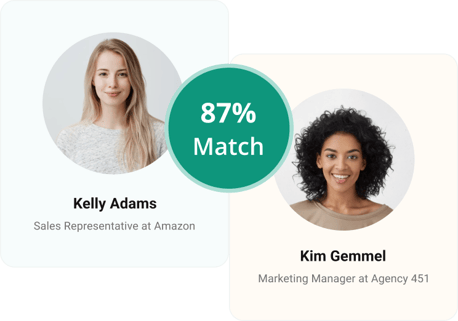
Qooper's algorithm-driven mentor matching capability pairs new hires with experienced colleagues based on role, department, skills, career goals, and personal interests — automatically and at scale. This eliminates the administrative burden of manual mentoring coordination and ensures that every new hire is connected to a relevant, well-matched mentor from the earliest days of their onboarding journey.
Within a custom onboarding training program, this mentor relationship serves as the applied learning layer, a space where new hires can ask questions, contextualise formal training content, receive role-specific guidance, and build the relational foundations of long-term engagement and performance.
Structured 30-60-90 Day Development Programs
Qooper enables L&D and HR teams to design structured 30-60-90 day development programs that run in parallel with the formal training learning path. These programs assign specific conversations, activities, reflections, and professional development milestones to both mentor and mentee at defined intervals, ensuring that the mentoring relationship is purposeful, consistent, and aligned with the broader talent development strategy of the organisation.
These structured programs can be customised by role, seniority level, and department — ensuring that a new hire in the Sales department receives a different development trajectory than one joining a technical or clinical team, whilst both benefit from the same high-quality mentoring infrastructure.
Peer Learning Communities and Group Programs
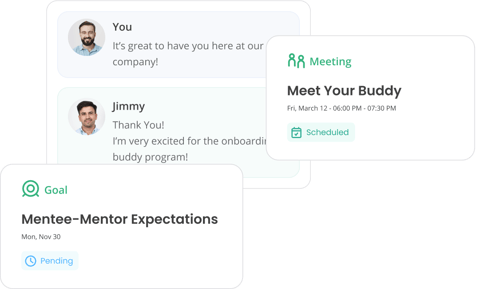
Beyond one-to-one mentoring, Qooper facilitates peer learning circles, cohort-based group programs, and professional development courses that connect new hires with a broader community of colleagues. These communities support the social learning dimension of the custom onboarding training program — providing spaces for reflection, collaborative problem-solving, and cultural integration that formal training cannot replicate.
For organisations with large onboarding cohorts, remote or hybrid workforces, or distributed global teams, Qooper's community features are particularly valuable — creating genuine connection and belonging across geographic and organisational boundaries.
Analytics and Knowledge Retention Tracking
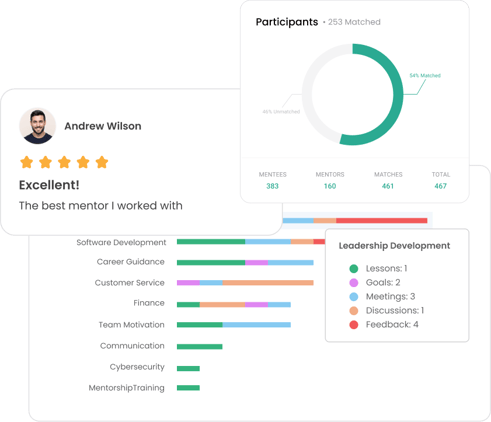
Qooper's analytics dashboard surfaces mentoring engagement metrics, program completion rates, and feedback data that complement the training analytics provided by the LMS. This combined view, formal training completion alongside mentoring engagement and peer learning activity, gives HR and L&D leaders a holistic picture of each new hire's onboarding experience and knowledge retention trajectory.
These insights enable proactive identification of new hires who may be struggling, whether with the formal training content, the cultural integration, or the relational aspects of onboarding, and allow timely intervention before disengagement escalates into attrition. To explore how Qooper can enhance your custom onboarding training program, visit Qooper.
Best Practices Framework for Custom Corporate Onboarding Training
The following framework synthesises the best practices for custom corporate onboarding training across four key dimensions: design, delivery, technology, and measurement.
|
Dimension |
Best Practice |
Key Tool / Platform |
Success Indicator |
|
Design |
Build around role-specific performance outcomes, not generic content coverage. |
Instructional design framework / TNA |
Training relevance score (learner survey) |
|
Design |
Incorporate soft skills training and cultural immersion alongside technical content. |
Articulate 360, video content |
Cultural alignment score at 90 days |
|
Design |
Apply spaced repetition and microlearning to improve knowledge retention. |
LMS, microlearning platform |
Knowledge check scores at 30/60 days |
|
Design |
Design for blended learning: eLearning + ILT + mentoring + peer learning. |
LMS + Qooper |
Training completion and NPS |
|
Delivery |
Automate learning path assignment upon hire confirmation via HRIS integration. |
Day-one readiness rate |
|
|
Delivery |
Assign a mentor on day one through automated matching. |
Qooper |
Mentor match acceptance rate |
|
Delivery |
Deliver compliance training as custom, role-scoped content — not generic modules. |
LMS compliance module |
Compliance completion rate |
|
Technology |
Deploy on a mobile-accessible, accessible LMS platform. |
LMS (Canvas, Cornerstone, etc.) |
Mobile access rate |
|
Technology |
Integrate LMS with HRIS, onboarding system, and Qooper for unified tracking. |
Workday / LMS / Qooper |
Data accuracy across systems |
|
Technology |
Use Articulate 360 or equivalent for high-quality custom eLearning content. |
Articulate 360 |
Learner engagement metrics |
|
Measurement |
Assess knowledge retention through scenario-based checks — not recall quizzes only. |
LMS assessment engine |
Assessment pass rates |
|
Measurement |
Track employee engagement and employee satisfaction at 30/60/90 days. |
Feedback system / pulse surveys |
eNPS and CSAT scores |
|
Measurement |
Monitor performance management outcomes at 90 days vs. pre-training baseline. |
HRIS / Performance module |
Time-to-full-productivity |
|
Measurement |
Report on talent development outcomes annually to demonstrate strategic ROI. |
HR analytics dashboard |
Retention and promotion rates |
Conclusion
Custom corporate employee onboarding training is one of the most strategically significant investments an organisation can make in its people. By designing training programs that are tailored to the specific requirements of each role, aligned with the organisation's culture and values, and delivered through a blended learning architecture that combines custom eLearning, instructor-led training, microlearning, and structured mentoring, companies can create onboarding experiences that genuinely transform the new hire journey, from a necessary administrative process into a powerful foundation for long-term engagement, performance, and retention.
Qooper provides the critical human layer that elevates custom onboarding training from a content delivery exercise into a genuine employee experience, connecting new hires to mentors, peer communities, and structured development programs that build the belonging, capability, and commitment that sustain long-term organisational contribution. The combination of well-crafted custom training content, an integrated LMS, and Qooper's mentoring and peer learning platform represents the current gold standard in corporate onboarding training design.
Frequently Asked Questions (FAQs)
What is the difference between custom onboarding training and off-the-shelf training?
Off-the-shelf training refers to pre-built content libraries, generic eLearning modules, compliance courses, or professional development courses available for purchase or subscription that are applied broadly across an organisation without significant customisation. Custom onboarding training, by contrast, is designed specifically for the organisation's roles, culture, and performance requirements. Custom content is more resource-intensive to develop but consistently delivers superior knowledge retention, higher employee engagement, and better transfer of learning to on-the-job performance.
How long does it take to develop a custom onboarding training program?
Development timelines vary considerably depending on the scope and complexity of the training program. A focused role-specific training program for a single function may be developed in four to eight weeks. A comprehensive enterprise onboarding training program encompassing multiple roles, departments, and geographies — with full eLearning, ILT, and mentoring components — typically requires three to six months of design, development, and testing. Organisations can accelerate timelines by prioritising the most critical training content for launch and phasing in additional custom content iteratively.
How does Qooper complement a custom onboarding training program?
Qooper provides the mentoring, peer learning, and structured development layer that formal custom training programs — however well designed — cannot deliver on their own. Whilst the LMS and eLearning content build role-specific knowledge and compliance awareness, Qooper connects new hires to experienced mentors, peer learning communities, and structured 30-60-90 day development programs that contextualise formal training in the reality of day-to-day work. Together, formal custom training and Qooper's mentoring platform create a comprehensive onboarding experience that addresses both the cognitive and relational dimensions of new hire integration.
What metrics should be used to evaluate a custom onboarding training program?
An effective evaluation framework for custom onboarding training should assess four levels:
(1) Learner Reaction — training satisfaction scores, net promoter score, and feedback captured through a structured feedback system;
(2) Knowledge Retention — assessment pass rates, knowledge check performance at 30 and 60 days, and scenario completion data from the LMS;
(3) Behaviour Transfer — performance management observations at 30, 60, and 90 days, and manager-reported readiness assessments;
(4) Organisational Results — employee retention at one year, employee engagement scores, talent development pipeline data, and time-to-full-productivity benchmarks.
How should compliance training be customised within an onboarding program?
Compliance training should be scoped to the specific regulatory requirements applicable to each role, location, and sector — rather than applying a single uniform compliance module to all employees. Role-scoped compliance training improves completion rates, knowledge retention, and regulatory audit outcomes by ensuring that employees are only required to complete training that is directly relevant to their responsibilities. Custom compliance eLearning content can be developed using Articulate 360 and deployed through the LMS with mandatory completion tracking and automated reminders.
What is blended learning and why is it important for onboarding training?
Blended learning refers to the deliberate combination of multiple training modalities — custom eLearning, instructor-led training, microlearning, social learning, peer learning, and mentoring — within a single structured learning path. Blended learning is important for onboarding training because different learning objectives are best served by different modalities: eLearning for scalable knowledge delivery, ILT for complex skills and culture immersion, microlearning for knowledge retention reinforcement, and mentoring through platforms such as Qooper for contextualisation, guidance, and relational integration. No single modality consistently outperforms a well-designed blended learning approach.
How can organisations improve knowledge retention in onboarding training programs?
Knowledge retention in onboarding training is maximised through a combination of spaced repetition, scenario-based assessment, social reinforcement, and mentoring. Specifically: designing microlearning reinforcement modules that re-introduce key concepts at 7, 14, and 30-day intervals post-training; using scenario-based assessments in the LMS rather than simple recall quizzes; embedding knowledge reinforcement into structured mentoring conversations via Qooper; and aligning performance management check-ins with training milestones so that managers actively reinforce and apply training content in their conversations with new hires.
Is custom onboarding training scalable for large organisations?
Yes — when designed around a modular architecture and deployed through an integrated LMS, custom onboarding training is highly scalable. The investment in custom content development is primarily a fixed cost; once developed, custom eLearning modules can be delivered to unlimited numbers of new hires at negligible marginal cost. Platforms such as Qooper similarly scale the mentoring layer — automating mentor matching and programme enrolment regardless of cohort size. The key to scalability is designing modular content that can be assembled into role-specific learning paths rather than creating entirely separate programs for each function.
How does custom onboarding training support talent development and professional development beyond the first 90 days?
A well-designed custom onboarding training program establishes the foundations of a long-term talent development relationship between the employee and the organisation. By connecting new hires to mentors, peer learning communities, and professional development courses through platforms such as Qooper from the earliest days of their tenure, organisations create the conditions for sustained development that extends well beyond the formal onboarding period. Employees who experience a high-quality onboarding training program are more likely to pursue internal learning opportunities, engage with leadership courses, and remain with the organisation as their careers develop — contributing to a stronger internal talent development pipeline.
.jpg)