Single Sign-On (SSO) integration in Qooper streamlines access for both participants and administrators by allowing secure account creation and login through your organization’s Identity Provider (IdP).
Enabling and configuring SSO helps centralize authentication, minimizes administrative workload, and supports scalable onboarding for large teams or cross-functional groups.
By following our step-by-step guide, organizations can quickly set up and enforce SSO, making program access seamless and secure for every user.
Step 1: Access the Admin Dashboard
-
Go to platform.qooper.io.
-
Sign in to your Admin Dashboard.
-
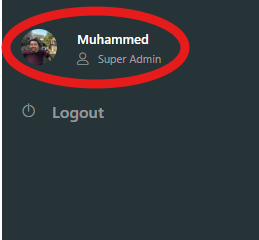
Click on your profile at the bottom of the left pop-up menu.
Step 2: Enable SSO
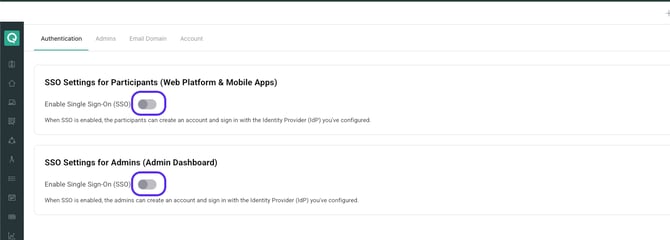
- Navigate to the Authentication section.
- Note that there are two SSO settings
- SSO Settings for Participants (Web Platform & Mobile Apps): When SSO is enabled, the participants can create an account and sign in with the Identity Provider (IdP) you've configured.
- SSO Settings for Admins (Admin Dashboard): When SSO is enabled, the admins can create an account and sign in with the Identity Provider (IdP) you've configured.
- Click on the switch to enable SSO
Step 3: Configure Your SSO
Follow the instructions in the following video to learn how configure an identity provider of your organization and manage them.
All the information you need gather to configure the identity provider are as follows:
- Identity Provider Name
- Metadata XML File Or URL
- Attributes to Map (if needed)
Step 4: Email Attribute Mapping
Before moving forward, you need to setup email attribute mapping so that Qooper system knows which attribute to look for to save the participant's emails.
When configuring your identity provider, use the below as an attribute name:
http://schemas.xmlsoap.org/ws/2005/05/identity/claims/emailaddress
Step 5: Grant Access to Your Participant Group in the Identity Provider
Important: After setting up SSO, you must grant access to the correct group of participants in your Identity Provider (IdP).
Assign the Qooper app to the group of participants, such as mentors, mentees, or admins. - Only users in these groups will be able to log in with SSO. - If this step is missed, SSO login will fail even if everything else is correct.
Tip: Check group assignment before testing SSO to prevent login issues.
Step 6: Enforce SSO (Optional)
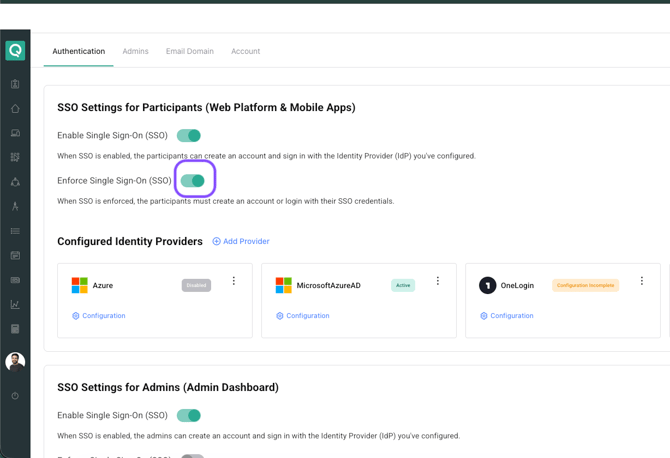
If you would like your participants the ability to sign up or login via email/password, you can skip this step
You can enforce SSO to make the SSO sign up or login mandatory. Make sure to complete the configuration of at least one identity provider system (Okta, Azure/Entra, etc.) with Qooper so that participants can have at least one way of accessing the platform with valid credentials